LANSING, Mich. (AP) — Michigan’s chief medical executive will stand trial on involuntary manslaughter and other charges in a criminal investigation of the Flint water crisis, a judge ruled Friday.
Dr. Eden Wells is among five people facing an involuntary manslaughter charge in connection to an outbreak of Legionnaires’ disease in the Flint area in 2014 and 2015. Wells is now the second high-ranking state official, along with Health and Human Services Director Nick Lyon, to be ordered to trial .

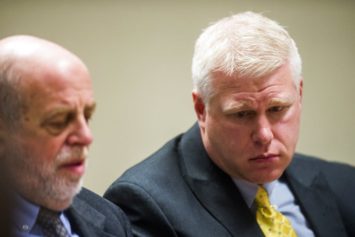
Dr. Eden Wells, Michigan’s chief medical executive, stands in court Friday, Dec. 7, 2018, at Genesee District Court in downtown Flint, Mich. Wells will stand trial on involuntary manslaughter and other charges in a criminal investigation of the Flint water crisis, a judge ruled Friday. (Jake May/The Flint Journal via AP)
Wells, a member of Gov. Rick Snyder’s Cabinet, leaned of the trial decision from Judge William Crawford II while inside a Flint courtroom. Wells has denied any wrongdoing, and her attorney say she had no legal duty to warn the public and worked diligently to investigate and resolve Flint’s water issues.
Michigan Attorney General Bill Schuette charged Wells last year with obstruction of justice and lying to the police, and he later added the manslaughter charge. Schuette has said key officials, including Wells, knew about a spike in Legionnaires’ but waited too long to tell the public.
Some experts have blamed the outbreak on the use of the Flint River for municipal water. Legionella bacteria can emerge through misting and cooling systems, triggering a severe form of pneumonia, especially in people with weakened immune systems.
At least 90 cases of Legionnaires’ occurred in Genesee County, including 12 deaths. More than half of the people had a common thread: They spent time at McLaren Hospital, which was on the Flint water system.
A top state lawmaker, Senate Minority Leader Jim Ananich of Flint, said Friday that Well’s “inaction caused irreparable harm to the people of Flint.”