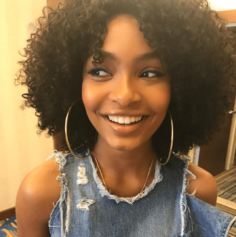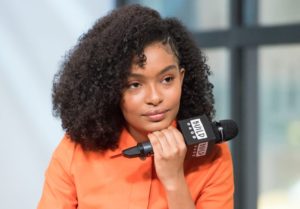
Yara Shahidi doesn’t see herself as light-skinned. (Photo by Mike Pont/Getty Images)
Nearly a month after disengaging with fans who challenged her over the colorism on “Grown-ish,” Yara Shahidi is addressing the issue head-on.
The actress was slammed for blocking Twitter users who asked her to address the lack of dark-skinned people on her hit FreeForm show in March. At the time, she tweeted that a user, “wasn’t blocked because of her comment on colorism (as I’ve said, I’m always open to conversation) It was that they felt the need to tag me in this thread.” However, fans were still left with a bad taste in their mouths.
Now, in an April 2018 story for Essence, Shahidi says she acknowledges the benefits that having lighter skin can bring.
“I get that within the Black community there are a couple of us who are chosen, not by any fault of our own, to represent [everyone],” she explained.
And even though she has played the same character, Zoey Johnson, for five years and hasn’t broken through on the big screen or on shows outside of “Black-ish” and it’s spinoff, she knows she has it better than some her dark-skinned peers.
“[I began to see that] people have constantly had to deal with things that slowly chip away at their identity,” she said. “These microaggressions make you feel like you’re never enough. I realized that if I still experience it on a level of being socioeconomically privileged, then I’m not even experiencing half of it.”
Still, Shahidi maintains that she is firmly Black. And regardless of her complexion or how others identify her, light-skinned is not how she sees herself. She’s been outspoken about her Black/Iranian heritage and notably identifies as such.
“I’m brown-skinned. I personally don’t view myself as light-skinned,” she said. “I also understand I’m not dark-skinned. I don’t know how to classify myself, but when you see me unless you hear my name, no one’s like, ‘That’s a young Iranian girl.’”
Still, many Twitter users questioned her failure to acknowledge her lightness compared to darker hopeful actresses.
“I used to be like Yara Shahidi and say that I don’t see myself as light skinned but that really is just privilege in colorism, someone said. “Same thing as ‘I just see myself as human’ when white people don’t want to discuss race seriously.”
“WE ARE ALL BLACK,” another exclaimed.
“Sis…. what…. I guess,” another puzzled user said.