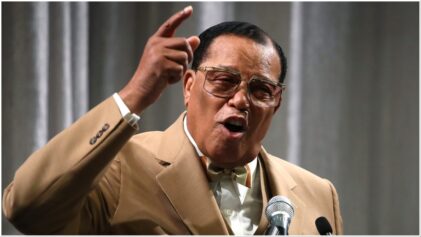
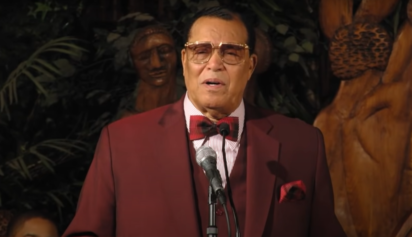
Nation of Islam Leader Louis Farrakhan is taking to cyberspace on Wednesday to answer questions on everything from the presidential race, youth, education, media, religion and hip-hop.
The outspoken leader will engage in a question-and-answer session starting at 8 p.m. EST when he engages users of Twitter, Facebook, and YouTube users in his first ever social media town hall meeting.
Farrakhan, 79, has enjoyed a controversial career as a motivator and leader of the black community.
He has frequently been accused of anti-Semitism, once even calling Jews “the greatest controllers of black minds.” But he also organized the largely successful Million Man March in 1995 that sought to increase the role of black men in their homes and communities.
Farrakhan has never been shy about aggressively taking on issues that confront the black community.
In a speech in New York on Monday, he chided the African-American community for not taking more responsibility for the scourge of gun violence that has claimed the lives of so many young, black men.
Farrakhan’s message that blacks must look at themselves to stem the tide of urban violence echoed that of NYPD Commissioner Raymond Kelly, who irritated some leaders and elected officials in the black community this summer when he called on black voices to speak out forcefully on gun violence.
“There should be outcry that 96 percent of the shooting victims in this city are black or Latino,” Kelly said in July. “Most of them are young men. When you look at it, at the end of the day, you sense there’s reasons as to why people are being killed. There should be a huge outcry, but there isn’t.
Prior to that, Farrakhan had directed his ire at President Barack Obama in late May following his endorsement of gay marriage, calling him the “first president that sanctions what the scripture forbids.”
It wasn’t the first time Farrakhan has publicly assailed Obama. In 2011, Farrakhan labeled him an “assassin” and warned of the consequences of the death of Colonel Muammar Gadhafi of Libya, with whom Farrakhan had a close friendship since the 1990s.
It was a far cry from 2008, when the Nation of Islam leader was considerably more welcoming of Obama, telling the crowd at a Saviours’ Day event that when Obama talks, “the Messiah is speaking.”