
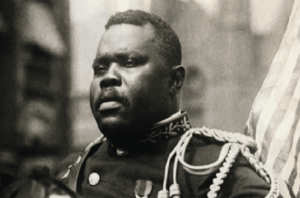
Marcus Garvey (Jamaica Observer)
Most civil rights experts will tell you this: Before Martin Luther King Jr., before Malcolm X, before Nelson Mandela, there was Marcus Garvey, the Jamaican-born Black empowerment leader who died in 1940.
“Marcus Garvey was before his time,” says Niyala Harrison, a Jamaican-American attorney in Miami and president-elect of the Miami-based Caribbean Bar Association.
“He was speaking about things that had never been spoken about before when we’re talking about self-determination and the advancement of Black and colored people.”
So, Harrison is disappointed that Barack Obama, the first Black U.S. president, didn’t grant Garvey a posthumous pardon before leaving office last week.
Garvey was convicted in the U.S. in 1923 of mail fraud. His sentence was commuted in 1927, but he was deported back to Jamaica. Since then, supporters have sought his exoneration because, they say, his trial was racially motivated. FBI documents all but acknowledge that.
“It was a political witch hunt with absolutely no evidence,” says Garvey’s son, Dr. Julius Garvey, a vascular surgeon on Long Island, New York.
“He’s still being stained in the United States, so it’s important to clear that from his name. It’s a slur that needs to be removed.”
This month, Julius Garvey donated his father’s Jamaican National Hero medal to a museum in Kingston. Jamaica, in fact, chose Marcus Garvey as its first National Hero after the country won independence from Britain in 1962.
Marcus Garvey wasn’t the first Black civil rights leader, but he arguably was the first to focus on Black pride and self-reliance. The organizations he founded in the early 20th century, such as the African Communities League, crusaded for everything from Black entrepreneurship to the pan-African struggle against colonial rule.
Read more here.


