
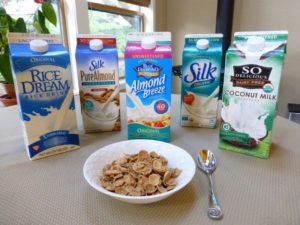
 Soy Milk. Hemp Milk. Almond Milk. Cashew Milk.
“Dairy” options for the American consumer have expanded over the past few years, but now, one Wisconsin lawmaker is fighting to stop non-dairy producers from labeling their creamy beverage products as “milk.”
Wisconsin Sen. Tammy Baldwin introduced legislation on Thursday, Jan. 12, that would force the FDA to enforce the agency’s current food standards and block plant-based products from using dairy terms like “milk,” “cheese” and “yogurt,” Fox News reported. Baldwin argued that the products are mislabeled under the FDA’s current definition for milk and thus are misleading to consumers. Not to mention, they hurt dairy producers.
“Imitation products have gotten away with using dairy’s good name for their own benefit,” she said in a written statement.
According to the FDA’s Code of Federal Regulations for standardized milk and cream, “milk” is defined as “a lacteal secretion, practically free from colostrum, obtained by the complete milking of one or more healthy cows.” In its final packaging, milk can either be pasteurized or unpasteurized, but must not contain less than 3.25 percent milk fat.
Milk producers like Patty Leonard, whose family has been farming in Northern Virginia for nearly 100 years, told CBS News that they’ve seen a decline in both the consumption and prices of diary products over the past year as plant-based substitutes like soy and almond milk have grown more popular. Like Baldwin, Leonard feels that labeling non-dairy products as “milk” can be misleading to consumers, as the label implies the plant-based products provide the same nutritional value as milk, which is not the case.
“They are using the good name and the good qualities and the standard of milk to share their product,” she said. “Which makes it all the more important that we have a clear definition and a clear standard so that our consumers have a clear understanding of what they’re purchasing and there’s no confusion.”
Despite the plight of America’s dairy producers, non-diary producers have argued there’s no harm in labeling their products as “milk.” In fact, they said the dairy label is what helps them sell their products. CBS News reported that the plant-based milk-substitute industry raked in almost $1.4 billion in 2016 and has grown a whopping 54 percent in the U.S. over the past five years.
Vegan yogurts and cheeses also have grown in popularity among American consumers.
“If a company is making a product that tastes like yogurt, feels like yogurt, [but] happens to be made from almonds, why shouldn’t that company be able to use the word ‘yogurt?'” Michele Simon, the executive director of the Plant Based Foods Association, asserted on Wisconsin Public Radio. “That company wants to send a message to a consumer that that consumer is going to get a similar experience to yogurt without the dairy.”
While the dairy-substitute industry enjoyed a period of economic growth last year, dairy producers experienced an 11 percent decline in sales, CBS News reported. That’s why in December, 32 congressmen from dairy-producing states across the U.S. penned a letter urging the FDA to enforce its existing “milk” definition.
“I have never milked a soybean. I don’t suppose if you cracked one open, you’d find much milk or any liquid there,” said Chris Galen, who works for the Milk Producers Federation. “All we want is for the government to do its job and to enforce the regulation on the books that says, ‘You don’t got milk if it comes from a nut or a seed.'”
In the past, the FDA has stayed out of disagreements over who can use the “milk” label, according to the news site. But the agency has said it will respond to the concerns of the Congress members who wrote to them.


