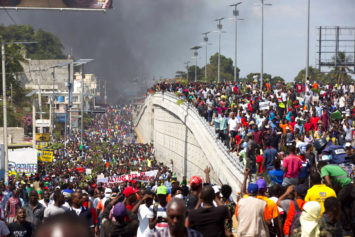
Provisional Electoral Council (CEP). File photo
PORT AU PRINCE, Haiti — Following the forced postponement of presidential elections in Haiti that were originally planned for Sunday, Oct.9, the Provisional Electoral Council (CEP) on Friday announced new dates: the first round on Nov. 20, 2016, and the second round on Jan. 29, 2017.
Initially, the CEP had hoped to reschedule the long-awaited elections on Sunday, Oct. 30, but it said that it needed another three weeks because a significant number of voting centers were damaged or partially destroyed by Hurricane Matthew and, in some cases, the voting centers are not accessible because the roads are currently impassable in many locations.
In addition, many residents left their homes without their voter identification card or lost it during the passage of Matthew.
The CEP indicated it has three priorities in relation to the existing situation:
First, it said that if it has the responsibility to organize elections for all citizens of the country, it cannot simply ignore a portion of the population, and it cannot say it will hold elections just in places where there are no problems.
“[…] if the elections are carried out, they will be for everyone, especially when it is question of a presidential election,” the CEP said.
The second priority is to ensure elections that are credible, rigorous and transparent.
Third, the CEP wants a credible election that is acceptable to all departments of the country in order to bring legitimacy to those who will be elected in these elections, so that the country has political stability.
“We do not want elections that bring more problems, which instead of bringing legitimacy to those elected, they marginalize the political process,” the CEP said.
Read more here.