By: James Clingman
When you die, what will you leave behind, bills or benefits?
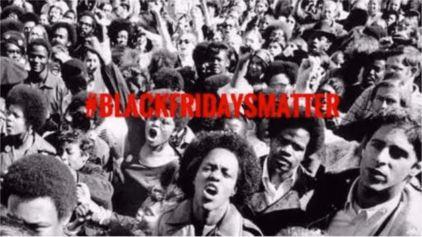
That’s the main question posed by the upcoming documentary film by Atlanta videographer and filmmaker, Ric Mathis. The question is applicable on a personal and collective level, and one each of us should honestly answer. Mathis has captured the essence of that question, as well as the practical solutions to the frivolous Black spending phenomenon, in his upcoming film, Black Friday: What Legacy Will You Leave? He transposed all the Black Friday rhetoric into appropriate action, not only for that day, but throughout the entire year and for the rest of our lives.
Topics of discussion in the film include negative spending habits, introduction of financial literacy to our youth, and the absence of support for African-American owned businesses by Black consumers.
“Black Friday is the Noah’s Ark of Economics, if you are not up on this you risk drowning in a sea of debt,” says Mathis.
After discovering the alarming imbalance of Black spending compared to economic growth within the Black community, Mathis used his videography expertise to educate and stimulate appropriate behavioral change with his film. He lays out the deficit-based economic model by which most of our people are living, and then presents an asset-based model for which we must strive.
As I stated on Montoya Smith’s Atlanta radio show, Mental Dialogue, considering the fact that Black Friday has saturated our mental tablets to the point of becoming just another cute phrase with no substance, writing and even doing a film on the subject of Black Friday is tantamount to trying to find a new angle to sell a bag of ice.
Even though I heeded the calls for blackouts and stayed home on that day, my response has always been that blackouts would not really make a difference unless we implemented a long term strategy that directed the dollars we withdraw back to ourselves and our own businesses. It’s not just about what not to do— it’s more about what to do.
Mathis deals with my contention in a positive manner by covering the short term and the long term repercussions of our withdrawal and recycling of Black dollars in his film. It’s not just about Black Friday itself or the few days preceding and following Black Friday. Rather, it captures the various aspects of a successful economic empowering strategy, beginning with an introspective question each of us can answer, and then building a foundation of information regarding frivolous spending, economic literacy, saving, investing, business development and support, cooperative and collective economics. Mathis caps it all off with practical solutions to stop the bleeding and reverse our trade deficit with other groups in this country.
The term Black Friday did not emanate from Black people. After several iterations of the term as far back as 1961, it has been promoted as a positive reality of businesses reaping huge profits not only from Black consumers but from all consumers. Although quite apropos when it comes to the Black consumer, vis-à-vis our penchant for spending our money on everything anyone else makes, the term “Black Friday” does not have to be our reality, which is the basic message from the film. We deserve what we accept, and we must stop accepting the self-deprecating images and self-defeating characterizations attributed to Black people as it pertains to our economic interests. Our economic imperative must be rooted in the reality of our relative economic position in this country.
Many of the stories we read on social media are centered on Black athletes and entertainers who spend tremendous sums of money on material things and/or waste it in clubs on liquor and strippers. We read about robberies and murders by young people who want a certain pair of shoes or a jacket—and the latest craze—young girls are stealing hair!
Except for Black Enterprise Magazine and a few other Black-owned print media, the stories about Black entrepreneurs and others who are doing great things in the economic arena are buried, if they are in print at all. So who bears the responsibility of changing that reality? A long time ago I wrote, “The answer to media bias is ‘media by us’.” Ric Mathis has answered that call of responsibility, and I dare say obligation, to produce a video that will not only enlighten us but also move us to action—move us to take responsibility for the financial resources with which we have been blessed.
As we reflect on our answers to Black Friday’s questions, let us also ponder our economic condition and then commit to making appropriate change toward true economic empowerment for Black people.
For more information visit TheFilmBlackFriday.com.