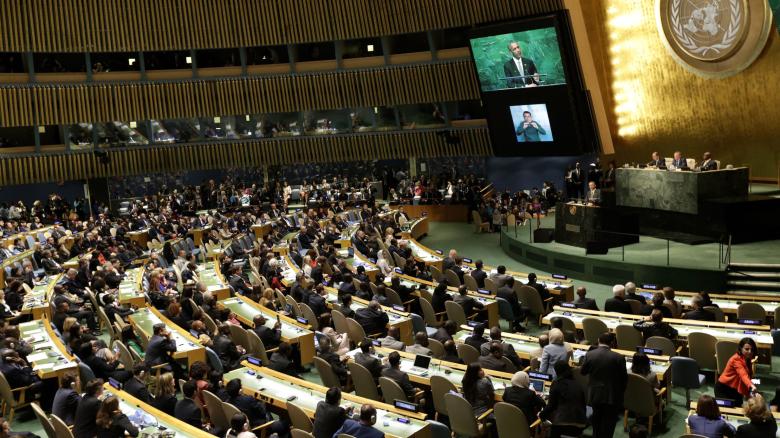
 The U.N. adopted its Sustainable Development Goals on Friday, building on the Millennium Development Goals, launched in 2000. This offers a moment to reflect on the successes of that 2000 agenda, but also to look forward, learning lessons and working to ensure that this new agenda has the highest possible chance of success.
As an African, I view these ambitious new targets, which include goals to end poverty and inequality and protect the environment, as a precious opportunity to accelerate the development trajectory of Africa, not least by more effectively leveraging the private sector as an agent to generate and advance economic and social wealth.
I often write about Africa from the perspective of business, having spent my entire career working as a banker, investor and entrepreneur across the continent. But I also write as a father whose children will be among those who inherit our planet. If these goals are achieved, we will leave them a better world than the one we inherited from our parents.
Many of the challenges that the new goals seek to address have a particular relevance to Africa. It is no secret that the continent remains among the least developed regions in the world, and that most African countries fell short in achieving a number of the Millennium Development Goals. Yet we’ve made considerable progress on key issues over these last 15 years. Sub-Saharan Africa reduced the rate of its under-five mortality five times faster since 2000, and the rate of maternal mortality has halved in this same period. The continent has been home to six out of the world’s 10 fastest-growing economies.
There are many people to thank—the policy makers who set measurable milestones; African leaders like Presidents Olusegun Obasanjo and Paul Kagame who were bold in their reforms; African philanthropists such as Mo Ibrahim; foreign philanthropists, above all Melinda and Bill Gates; and provocateurs such as Bono who catalyzed world opinion.
Read more at time.com