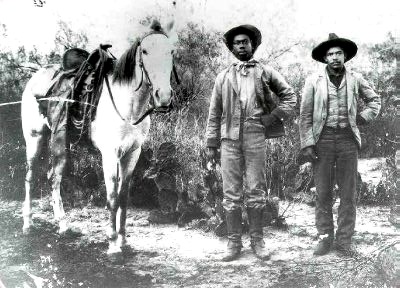
Black Cowboys
The irony behind the word “cowboy,” is that it was used to negatively describe Black “cowhands” but now serves as a universal depiction of the bootstrapping, gun-toting white males associated with western culture.
This is evidenced in popular films including, but not limited to, The Magnificent Seven (1960), Django (1966) and The Assassination of Jesse James by the Coward Robert Ford (2007).
But let’s not forget about the untold story of the Black cowboy, who is considered in more ways than one to have contributed a great deal to the pioneering western frontier. Unfortunately, Black cowboys are rarely seen, mentioned or given credit for in American history.
Dating back to the late 1800s, a large number of cowhands were enslaved Africans, as records indicate at least one in four of American cowboys were of African descent. During this time farmers began searching for undeveloped land to harvest in the West. As a result, skilled workers in the realm of herding and ranching became in high demand, contributing to a vast majority of Blacks migrating to the Western hemisphere.
For enslaved Africans, this was just the tip of the iceberg, as the West not only provided an opportunity to receive higher wages but also offered a chance at sustaining a better life, supposedly free from the bondage, refuge and captivity of slavery. But this is not to say racial discrimination did not exist. According to historian, Kenneth Wiggins Porter, cowhands were rarely if ever promoted to positions of higher power such as the trail boss.
Although the exact number is unknown, with the cattle industry being centered in one of the most highly populated slave regions of the “Lone Star” state of Texas, critics suggest without question several thousand enslaved Africans as well as those born after the Emancipation worked within the Texas cattle industry.
Many of America’s Black cowboys traveled through various western states and territories such as Sedalia, Chisholm and Goodnight Loving trails. As time passed, many traded in the non-stop migrant lifestyle of the ranch for a more balanced permanence becoming railroad workers, farmers and store clerks.
It’s unfortunate Black cowboys are still fighting for a place in history. As scholars have proven, enslaved Africans were responsible for introducing cattle herding to the New World from their homelands in West Africa, leaving many to inquire about the notable absence of Blacks in the cowboy culture within mainstream media. It has been said that publishers purposely whitewashed or virtually ignored the contributions of Blacks within the western culture in order to appeal to a broader audience, also known as white America.
Despite Hollywood’s portrayal, books including The Journal of Joshua Loper by Walter Dean Myers and Black Cowboys of Texas published by the Texas A&M University Press debunk this notion. The pioneering legacy of cattlemen such as Nat Love, Addison Jones, Bronco Sam, Charley Willis and George Glen are just a few of the most notable Black cowboys who serve as a reminder about the Black Cowboy culture on the western ranges, and cattle trail throughout the nineteenth and twentieth centuries.