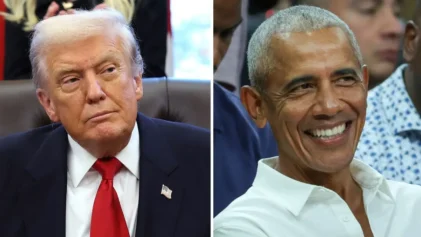
President Obama is adding to the flurry of executive action following last month’s State of the Union address by signing an executive order today setting a minimum wage of $10.10 per hour for workers under federal contracts, according to published reports.
The executive order will follow through on a proposal he mentioned in the State of the Union address, when he said, “Because if you cook our troops’ meals or wash their dishes, you shouldn’t have to live in poverty.”
“I’m eager to work with all of you. But America does not stand still — and neither will I. So wherever and whenever I can take steps without legislation to expand opportunity for more American families, that’s what I’m going to do,” he said. “To every mayor, governor, and state legislator in America, I say, you don’t have to wait for Congress to act; Americans will support you if you take this on. And as a chief executive, I intend to lead by example. Profitable corporations like Costco see higher wages as the smart way to boost productivity and reduce turnover. We should too.”
A minimum wage of $10.10 is the same rate proposed in congressional Democrats’ wider minimum wage bill. Obama’s order will also tie the contractors’ minimum wage to an inflation index, according to an outline released by the White House earlier this month.
This is an order that labor groups and progressive members of Congress had been calling upon the president to sign for the last several months. Groups of workers employed by federal contractors took part in one-day walkouts to protest low pay, according to the Huffington Post.
It is the seventh executive action signed by the president since his State of the Union address. Others include new retirement accounts, millions of dollars for broadband in schools, new “climate hubs,” and instructing federal agencies to commit to fair reviews of long-term unemployed job applicants.
The current federal minimum wage stands at $7.25 per hour and hasn’t been raised since 2009, after the last of a series of increases signed into law by then-President George W. Bush.
“We feel the federal government has a responsibility to set good labor conditions. We’re not talking about anything outrageous,” said Rep. Keith Ellison (D-Minn.). “If you look at the economics here, corporate profitability is very high now. They can afford it.”
The executive order is intended to cover people who perform janitorial, kitchen work and other low-wage services on behalf of federal contractors, covering roughly 250,000 workers. The measure would also include protections for the disabled.
“We applaud the administration for hearing the voices of the disability community and including disabled workers in the new minimum wage protections for contractors,” said Ari Ne’eman, president of the Autistic Self-Advocacy Network. “We hope to work with them going forward to convince Congress to repeal Section 14(c) for all disabled workers. Equal rights should apply to everyone – we took a significant step forward on that road today.”