Tesla employees have filed yet another racial discrimination and retaliation lawsuit against the automaker, this one featuring HR executives who allege they were terminated after investigating and validating workers’ complaints of widespread racial harassment.
Six employees at Tesla’s Fremont, California, production facilities — five human resources professionals and a senior security operations manager — say they were unjustifiably disciplined or fired after standing up for workers who made complaints about racial slurs, racial harassment and discrimination, according to the complaint filed in U.S. District Court in California on Aug. 7 and obtained by Atlanta Black Star.
The company, which has faced several state, federal and private civil rights lawsuits alleging a racist and toxic workplace culture at its Fremont facilities over the past decade, has been in a defensive mode and eager to minimize and dismiss ongoing employee complaints that would open Tesla to greater legal liability, the lawsuit claims.
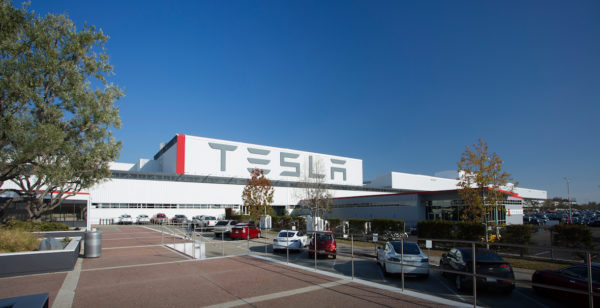
So its corporate leaders in Austin allegedly targeted many of its most outspoken employees in Fremont who substantiated instances of alleged racism and discrimination for termination.
Among them was Karen Draper, a Black woman who started working for Tesla in February 2022 as a senior HR business partner, managing five HR staff who worked with auto production employees producing Tesla’s in-demand Model Y electric vehicle.
In September 2022, a female Tesla production supervisor, “B.M.,” took a medical leave of absence, which was approved, the lawsuit says. Despite its medical necessity, B.M.’s manager, Kristopher Lindsey, was angered by her absence, seemed to have a personal vendetta against her and wanted to fire her while she was out, which he repeatedly expressed in emails to HR and other operational managers.
First, three HR staffers who directly reported to Draper told Lindsey that such an action would be illegal and subject Tesla to liability, since the employee had no documented performance deficiencies. Lindsey pressed them to fire her anyway, in a “loud, aggressive and maniacal way,” the complaint says.
Draper then met with Lindsey herself to explain why terminating B.M. while on protected medical leave was illegal, but Lindsey was “loud, rude, rabid and intransigent” with Draper, who then reported his behavior to Nicole Burgers, the overall HR manager for the Fremont facility, who was based in Texas.
Instead of validating Draper’s admonishment to Lindsey, “Burgers turned on Draper and opened an investigation against her for not capitulating to a production manager’s demands,” the lawsuit says.
Lindsey was a production manager for the Model Y, one of Tesla’s highest-volume vehicles, and there was “significant institutional pressure to keep Model Y production on course,” which meant keeping managers like Lindsey happy, the complaint contends.
“Healthy profits have always been more important to the Company than a healthy working environment,” the complaint alleges. “For Tesla, more bodies on the manufacturing line meant more vehicles flying out the factory door – no matter how unclean the hands were that were assembling those cars.”
Burgers and other managers then began treating Draper as an “Angry Black Woman,” the complaint says. Burgers accused her of being “aggressive” and “out-of-control” with Lindsey, who is white, while describing him as being merely “passionate” and “animated,” a race-based disparity that Draper was quick to confront her about.
Draper’s “refusal to acquiesce to Lindsey’s crusade to fire B.M. engendered in Burgers and her managers retaliatory animus toward Draper,” the lawsuit says. In February 2023, Burgers abruptly fired Draper for unspecified performance issues. Draper claims that it was a pretext, as she had glowing performance reviews, had never been disciplined, and only six months earlier had been personally promoted by Tesla CEO Elon Musk due to her superior performance.
The lawsuit says that Burgers was “a common denominator” in many of the unlawful and retaliatory terminations at Tesla.
“Burgers had an irrational fixation on fostering the delusion that the environment and culture at Tesla is one of tolerance and innovation, rather than racism and retaliation,” the complaint alleges. “By all accounts … she believed that she would be held accountable for further instances of racism and misconduct at the Fremont location” — particularly in light of the pending litigation against the company.
“Thus, rather than undertake to change the culture and environment that fostered those types of instances of racism, Burgers instead undertook to weed out the HR professionals beneath her” who investigated and substantiated it.

The lawsuit says Tesla employees often complained about seeing the “N-word” in graffiti on walls across the plant, in bathrooms, and “even on new Tesla vehicles rolling off the production line,” as well as frequently finding nooses on their desks or equipment.
Plaintiff Linda Peloquin, an HR manager who is Asian, was also allegedly fired by Burgers in retaliation for complaining and speaking out against Tesla’s refusal to fire an employee for “patently racist misconduct.”
In Peloquin’s case, a white manufacturing employee made an angry comment to a Black employee on the production line, asking him, “Do you want to hang by a tree?” The Black employee understood the comment to be referring to the lynching of Black men, and was offended and threatened by it, particularly because of the overall racial tension and toxicity in the Fremont facility, the complaint says.
One of Peloquin’s direct reports, Adam Chow, investigated the Black employee’s complaint and confirmed that it was intended to be racially derogatory and implied a threat of violence, and recommended that the white employee be fired. Peloquin concurred.
Burgers chastised Chow for his termination recommendation, and Peloquin spoke up to her in defense of her direct report’s performance and investigative findings. She also sent an email to Musk in December 2023 expressing her concerns about Burgers’ retaliatory conduct.
Five days later, Burgers called Peloquin into a meeting and fired her for “poor performance,” which the lawsuit claims was pretextual and in retaliation for lodging complaints against her. Peloquin had never received any negative performance reviews prior to then and both her superiors and subordinates had “consistently praised her work execution and her management prowess,” the lawsuit claims.
The lawsuit says that Burgers and her managerial counterparts in Texas also feared that another instance of racial misconduct would expose Tesla to further liability in the context of the state’s lawsuit, and generally to bad press and negative public perception.
It notes that in the summer of 2023, one of Peloquin’s HR superiors from Tesla’s Texas headquarters, Bert Somsin, came to visit the Fremont facility and, during a meeting, told HR staff that the number of validated race-based complaints coming out of Fremont was too high. He directed them to try to “re-frame” and “re-characterize” what were plainly race-based incidents as motivated by something — anything — other than race,” the lawsuit says.
Peloquin voiced her disagreement with that directive, she says, and also spoke out about “the favorable treatment toward white male employees in Fremont, who often received disciplinary leeway and favoritism that Black and Latino employees did not.” She claims that her complaints and objections on those issues engendered retaliatory animus in Burgers, Somsin and others against her.
Chow, who is Asian, was pushed out soon after advocating for the firing of the employee who allegedly said, “Do you want to hang by a tree?” the complaint says, despite previously excellent performance reviews.
The lawsuit says Burgers began “papering” Chow’s file with pretextual performance issues, including writing him up for an exchange that Chow had with a plant worker who claimed that Chow had acted unprofessionally by rolling his eyes at him during a meeting when the worker was discussing a complaint against management. Burgers knew that Chow suffers from a physical disability that causes involuntary movements of the muscles around his eyes, and that any perceived “eye roll” was due to his disability, the lawsuit says.
Chow consequently filed a complaint against Burgers that the write-up constituted illegal discrimination and retaliation based on his disability and escalated it up the HR chain.
Burgers allegedly was made aware of his complaint and in March 2024 advised Chow that he had two options — either accept being placed on a performance improvement plan (PIP) or accept a severance package and leave the company.
Chow knew that Burgers’ criticism of his work performance was groundless and that “it would be impossible to survive the PIP because it was designed for failure,” and to justify a poor performance termination down the line, the complaint says. So Chow had no choice but to resign, which the lawsuit deems a constructive termination.
Two other HR employees who had worked under Peloquin, plaintiffs Tiara Paulino and Sharnique Martin, were fired in early 2024, five weeks after sending an email to high-ranking managers at Fremont, including the HR director and manufacturing director, describing “the extraordinarily high attrition rate among HR professionals in Fremont, the lack of leadership by Burgers, and Burgers’ retaliatory misconduct toward HR professionals who spoke up and complained about those issues,’ the lawsuit says.
Ozell Murray, the head of security at the Fremont plant, began working at Tesla in 2018 after five years in law enforcement and four years in corporate security. He was promoted five times during his six-year tenure with Tesla, which allegedly ended after he complained about policy-based issues that were compromising the safety and security of the plant’s 22,000 employees.
Among the concerns of Murray and his 120-member security team were physical fights between employees and guns confiscated on the premises; drug and alcohol use evidenced by recovered drugs (including fentanyl and cocaine) and drug paraphernalia and regularly having to pull employees off the manufacturing line and send them home for being intoxicated; and multiple reports of sexual assaults on employee shuttle buses.
Murray was particularly vocal about a “zero tolerance” policy with respect to drug and alcohol impairment while working that he believed was selectively enforced and which supervisors were abusing as a means of retaliating against employees, the lawsuit says.
Under the policy, if a supervisor or manager suspected that a worker was under the influence, that manager could simply report that belief to security and someone from Murray’s team would then escort the worker off the premises without question.
But there were many instances when his team responded to such calls and could not perceive or discern that the individual reported by the manager was under the influence. Some were using the policy as a means to retaliate against subordinates, especially when an employee had turned down the supervisor’s sexual advances, or a manager wanted to retaliate against someone because of their race or ethnicity, Murray claimed.
Because of the way the policy was written, security personnel could not challenge the veracity of a manager’s allegations and had to “perp walk” the person out of the building. In March 2023, Murray voiced his objections to his superiors as well as to his HR counterparts about his concerns that the policy was being abused, particularly against Black and Latino employees.
In September 2023, Murray spoke out about an incident in which several HR employees were caught drinking alcohol on the Fremont property, which warranted immediate suspension. The offending employees were allowed to return to work, while others who had committed the same type of violation were not, according to the lawsuit.
Murray also spoke out against his direct supervisor, Ray Sethna, senior director of global security operations, after Sethna gave Murray what he perceived to be racially insensitive and insulting direction regarding Black would-be hires in the security department.
One of Murray’s direct reports, a female security officer, had been traumatized when a Tesla employee called her a “ni—er,” the complaint says. She was “so stressed by the incident and the impunity with which the word was used towards her” around the plant that she had to take a medical leave from work to recover.
Afterwards, Sethna counseled Murray that he should be informing all new Black security personnel that the use of the “n-word” was “simply ingrained in the culture at Tesla,” and Murray should only be bringing aboard people who are “willing to accept and acquiesce to the prevalence of that word in the workplace.”
The lawsuit says Murray’s supervisors eventually used an on-the-job knee injury he suffered in April 2024 to push him out. After being attacked by a Tesla employee while breaking up a fight among two employees, Murray took a medical leave, underwent surgery, and returned to work in June 2024 in a physician-approved light-duty capacity.
He says he was still able to perform the essential functions of his job, but his light-duty status provoked “disability-based discriminatory and retaliatory animus” in his supervisors and their HR counterparts.
Soon after he returned to work, he was notified that he was under investigation relating to a two-year-old incident in which he purportedly “said something inappropriate to some unidentified person” who was not a Tesla employee and which did not occur on Tesla property, the lawsuit says. The accusation was “false and nonsensical,” but Murray “understood the message that Tesla was sending him: they wanted him gone.”
In August 2024, Murray’s superiors forced him to take an unwarranted “stress leave” as a pretextual means of justifying his inability to work, he says, but which was actually retaliation by his managers based on his prior complaints and temporary disability, not because of his work performance. He resigned in September 2024 due to the discriminatory and harassing work environment created by the company, which the lawsuit calls a constructive termination.
The six plaintiffs accuse Tesla of retaliation, wrongful termination, disability discrimination and failure to prevent unlawful discrimination in violation of California law and public policy.
They seek a jury trial to determine financial damages, including loss of income, benefits, and employment-related opportunities for growth, as well as compensatory damages for injuries, including damage to professional reputation, humiliation, mental and emotional distress, and punitive and exemplary damages. They also want Tesla to pay for their legal costs.
Attorneys for Tesla did not immediately return a request for comment from Atlanta Black Star. The defendants, which include Tesla, Inc. and 10 unnamed employees, have 21 days to respond after being served with the complaint.


