
10 Ways Segregation and Economic Deprivation Defined Chicago

20_112669443

The Development of the Ghettos

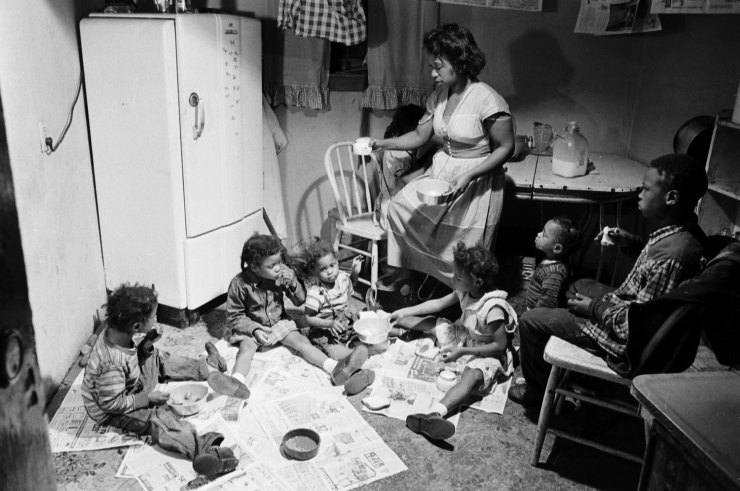
By the 1950s, the Eisenhower highway system was constructed, along with the new suburbs that white folk would flee to. The new housing projects that began to be constructed during the 1930s under the New Deal for poor whites became Black housing. “In 1950, the median household in public housing earned about 57 percent of the national median income. That number fell to 41 percent by 1960, then 29 percent by 1970. By the 1990s, the median family in public housing made only about 17 percent what the median family in America made,” reports The Washington Post.


4287753

White Violence

When the policies could not effectively segregate Black people, violence did. In order to keep Black people in their “place,” over-policing became the status quo. Anti-Black riots also became the norm during the 1940s-1960s. In author Arnold Hirsch’s “Making the Second Ghetto: Race and Housing in Chicago, 1940–1960,” he describes one such event. On July 28, 1957, a crowd of 6,000 to 7,000 whites attacked 100 Black picnickers who occupied a portion of the park that had previously been “reserved” for whites. The ensuing race riot took 500 cops to reestablish order. Events like this were common. Black residents also experienced racial bombings and arson regularly, according to Hirsch.

Subscribe To The ABS Newsletter — Get our stories in your inbox.

Independent journalism still matters.

We hope this story was worth your time. For over 14 years, Atlanta Black Star has stayed Black-owned and independently run. We didn't get here by waiting on ad budgets that were never built to prioritize us. Our readers did that.

Corporate support for Black media has always been thin. Outlets like ours get roughly 1% of the $170 billion spent on U.S. advertising each year, and that margin is shrinking further as advertisers walk back the DEI-linked commitments they made in 2020. That's the backdrop. It's not why we're asking.

The wider picture isn't any steadier. Newspaper ad revenue has fallen more than 80% since 2005, and local newsrooms are closing at a rate of roughly two a week nationwide. When outlets go under, it's rarely the ones built to center a Black perspective from the ground up that get to stick around.

We know a request for support isn't why you came here. But without readers choosing to fund this work directly, the depth of reporting we can do at home and abroad shrinks along with everyone else's. If you're not in a position to give, that doesn't change how much we value you as a reader.

If you are able to, a recurring contribution does more for us than a single one-time gift, because it lets us plan the next investigation instead of just the next invoice. It takes about 30 seconds, no long form, no account. Thank you for continuing to support independent journalism and freedom of the press.

Latest from Atlanta Black Star

Back to top