It’s used often as an adjective for certain actions as well as a certain type of location, but it has drifted away from its original meaning. Today it’s used to describe people as being “low class” or tactless, but it was originally a noun used to describe a place where Jewish people lived — a history that has racial implications of its own. The adaptation of that word into what it is today, according to Huffington Post editor Zoe Triska, is “essentially implying” that all Black people and other people of color are “low class.”
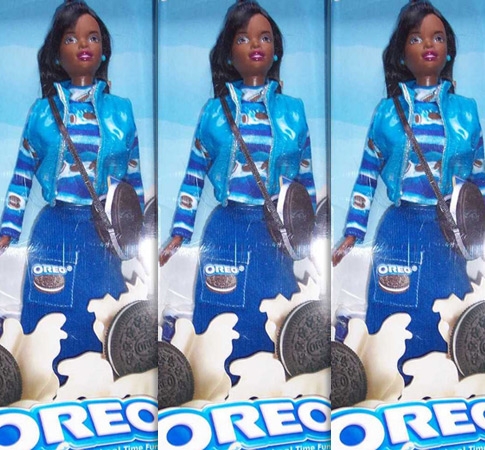
Oreo
This term is problematic for a multitude of reasons. It refers to a Black person who has “assimilated” to mainstream white culture, typically by using proper English, dressing in a conservative way or otherwise not displaying the negative characteristics often associated with being Black. The term ultimately suggests that there is indeed a divide in the intelligence and couth had by Black people when compared to white people. A professor of linguistics and languages at Michigan State University pointed out that the term has been used even throughout the Civil Rights era during times of integration, only furthering the notion that positive behaviors were white characteristics.
The ABS Newsletter — Stories that matter, in your inbox.
Independent journalism still matters.
We hope this story was worth your time. For over 14 years, Atlanta Black Star has stayed Black-owned and independently run. We didn't get here by waiting on ad budgets that were never built to prioritize us. Our readers did that.
Corporate support for Black media has always been thin. Outlets like ours get roughly 1% of the $170 billion spent on U.S. advertising each year, and that margin is shrinking further as advertisers walk back the DEI-linked commitments they made in 2020. That's the backdrop. It's not why we're asking.
The wider picture isn't any steadier. Newspaper ad revenue has fallen more than 80% since 2005, and local newsrooms are closing at a rate of roughly two a week nationwide. When outlets go under, it's rarely the ones built to center a Black perspective from the ground up that get to stick around.
We know a request for support isn't why you came here. But without readers choosing to fund this work directly, the depth of reporting we can do at home and abroad shrinks along with everyone else's. If you're not in a position to give, that doesn't change how much we value you as a reader.
If you are able to, a recurring contribution does more for us than a single one-time gift, because it lets us plan the next investigation instead of just the next invoice. It takes about 30 seconds, no long form, no account. Thank you for continuing to support independent journalism and freedom of the press.