Lessons For Black Protesters: 7 Things That Will Blow Your Mind About How the Occupy Wall Street Movement Was Crushed

Occupy Wall Street Holds Major Day Of Action In New York City

Government, Banks, Corporations All Partnered to Squash Movement

According to a December 2012 article in the Guardian, the Federal Reserve of Richmond, Virginia, hired a private security company to spy on Occupy Tampa and Tampa Veterans for Peace and passed privately collected information on activists back to the Richmond FBI.

The Domestic Security Alliance Council (DSAC), which is “a strategic partnership between the FBI, the Department of Homeland Security and the private sector,” gave corporate clients several tips on “civil unrest” ranging from “small, organized rallies to large-scale demonstrations and rioting.” It also advised workers to dress conservatively, avoid political discussions and “avoid all large gatherings related to civil issues … Bystanders may be arrested or harmed by security forces using water cannons, tear gas or other measures to control crowds.”
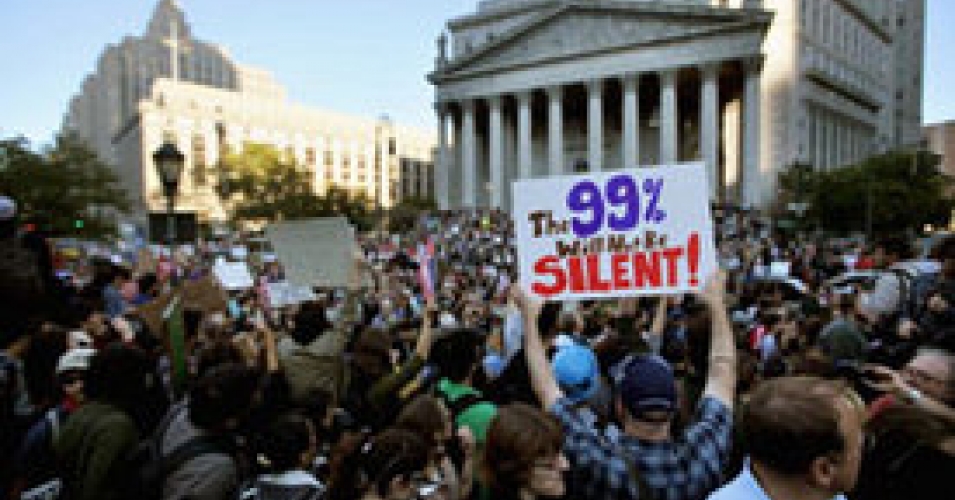
occupy-2

Infiltrated Colleges to Sabotage

The FBI was found to have committed spying abuses through its “Campus Liaison Program” in which the FBI in Albany and the Syracuse Joint Terrorism Task Force disseminated information to 22 different campuses’ police officials, who reported information to the FBI on OWS encampments made up of students and professors in an attempt to sabotage them. At least six American universities were reported to have facilitated this kind of partnership.

Democracy needs journalism it can trust.

This election season, the stakes are higher than usual — and so is the pressure on newsrooms to soften their coverage, stay quiet, or just disappear. Independent reporting, the kind that answers to readers instead of advertisers or political pressure, matters more in a moment like this, not less.

For over 14 years, Atlanta Black Star has stayed independent and reader-funded. We have no corporate owner and no shareholders telling us what to cover or how to cover it. That independence is also our biggest vulnerability: nothing protects it except readers choosing to fund it directly.

Newspaper ad revenue has fallen more than 80% since 2005, and local newsrooms are closing at a rate of roughly two a week nationwide. When outlets go under in a moment like this, it's rarely the independent, reader-funded ones that get to stick around.

We know a request for support isn't why you came here. But without readers choosing to fund this work directly, the depth of reporting we can do at home and abroad shrinks along with everyone else's. If you're not in a position to give, that doesn't change how much we value you as a reader.

If you are able to, a recurring contribution does more for us than a single one-time gift, because it lets us plan the next investigation instead of just the next invoice. It takes about 30 seconds, no long form, no account. Thank you for continuing to support independent journalism and freedom of the press.

Back to top