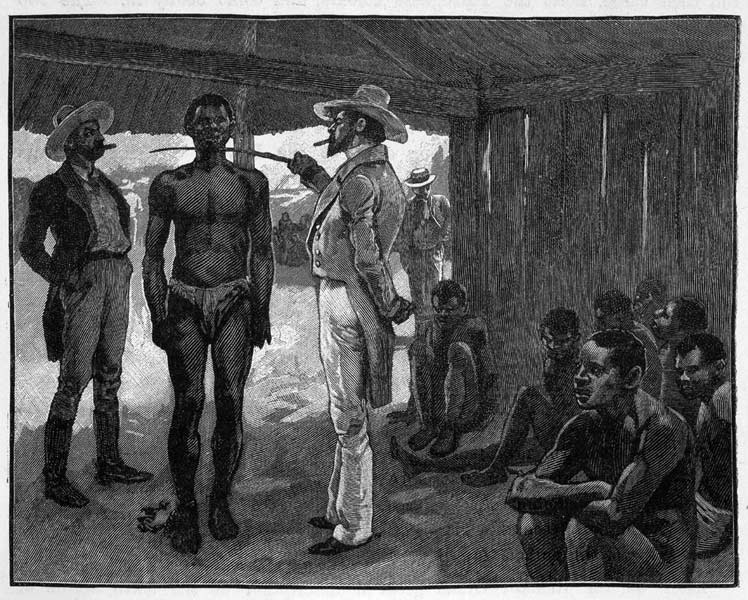
The white plantation owners used various methods to maintain complete control over their enslaved Africans. Their principal method was “divide and rule.” Members of the same tribe were separated and sent to different plantations to prevent communication between them. The goal was to prevent them from getting together to make any plans to rebel.
This separation, however, created a problem with communication, since the plantation would have different groups of Africans speaking different languages. Therefore, the planters had to find a way to communicate to the men, women and children. Soon a new language, known as Creole-Dutch, developed, and it became a common tongue among the enslaved Africans. When the British took control of Guyana in the 19th century, English words were injected into the language, and it became the basis of the Guyanese Creole language.

Enslaved Africans were also prevented from practicing their religions. Quite a few enslaved men and women were Muslims, while many others had their own tribal beliefs. But since the European Christian planters saw non-Christians as pagans, they made sure that the enslaved men and women could not gather to worship in the way they were accustomed to when they lived in Africa.
Later, Christian missionaries were permitted on the plantations and were allowed to preach to the enslaved Africans on Sundays. In time, many of them were converted to Christianity. It was the general feeling that the converted people became docile and were not willing to support rebellion on the plantations.