Largest University in the World
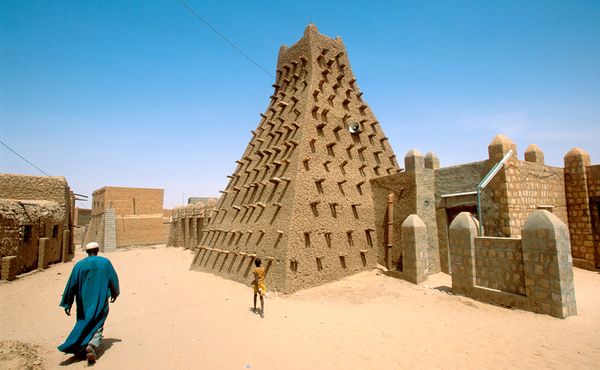
Under the Songhai empire, the city became a great Muslim educational center, with more than 180 Quranic schools and universities. By the end of Mansa Musa’s reign (early 14th century A.D.), the Sankoré mosque, also known as the University of Sankoré, was one of the first universities ever built in the world. A contemporary of Oxford and the Sorbonne, the level of learning at Timbuktu’s Sankoré University was superior to that of all other Islamic centers in the world. The three madrasahs — Djinguereber, Sidi Yahya and Sankore — facilitated 25,000 students, making it also the largest university in the world at the time.

One of the Largest Libraries of Manuscripts in Africa Since Egypt’s Library of Alexandria
Considered one of the leading beacons of Islamic knowledge, Timbuktu drew many scholars from around the world. An active trade in books between Timbuktu and other parts of the Islamic world led to the writing of thousands of manuscripts. During the cities golden age, books became the most valuable commodity above all other trade goods. Timbuktu housed more than 700,000 manuscripts, forming a priceless written record of African history.
About 20,000 manuscripts are preserved by the Ahmed Baba Institute, built in 2009 to protect the fragile literary artifacts.
Many of the books also reside in some of the local families’ private libraries. Among the families with manuscript collections, it’s traditional for one family member from each generation to swear publicly that he will protect the library for as long as he lives. The families revere their manuscripts, even honoring them once a year through a holiday called Maouloud, on which imams and family elders perform a reading from the ancient prayer books to mark the birth of the Prophet Muhammad.
Before and during the occupation of the city by Islamic militants, more than 300,000 Timbuktu manuscripts from the Ahmed Baba Institute and from private libraries were saved and moved to more secure locations in Mali.