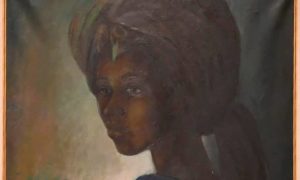
The “African Mona Lisa,” painted by Nigerian artist Ben Enwonwu, became a symbol of peace following ethnic clashes in the Nigerian–Biafran conflict of the 1960’s . (Photo by Ben Stansall/AFP/Getty Images)
After decades of being lost, a portrait of a Nigerian princess dubbed the “African Mona Lisa” sold at a London auction this week for £1.2 million ($1.7 million), smashing initial estimates.
The painting, a 1974 portrait of Adetutu “Tutu” Ademiluyi by Nigerian artist Ben Enwonwu, was projected to earn up to £300,000 ($414,000) when it went up for sale at the Bonhams auction house, Agence France-Presse reported. The likeness of the Ife royal princess recently turned up in a London apartment after having been missing for decades.
“The portrait of Tutu is a national icon in Nigeria, and of huge cultural significance,” said Giles Peppiatt, Bonham’s director of modern African art, who discovered the work after a family in north London contacted him. He said the family was shocked to learn the painting was a “missing masterpiece.”
“It’s very exciting to have played a part in the discovery and sale of this remarkable work,” he added.
According to AFP, Enwonwu is considered the father of Nigerian modernism. He created three paintings of “TuTu,” the locations of which remained a mystery until this most recent discovery. The portraits served as symbols of peace following a war among ethnic groups during the Nigerian–Biafran conflict of the late ’60s.
“It has been a legendary painting for 40 years, everybody keeps talking about Tutu, saying ‘where is Tutu?’ ” said acclaimed novelist Ben Okri, who told the AFP the portrait has taken somewhat of a mythical status back in his native Nigeria.
“He wasn’t just painting the girl, he was painting the whole tradition,” he said of Enwonwu. “It’s a symbol of hope and regeneration to Nigeria, it’s a symbol of the phoenix rising.”
Enwonwu’s piece, “Negritude,” also painted in the ’70s, sold for £100,000 ($138,000) in the same sale, according to the news service.