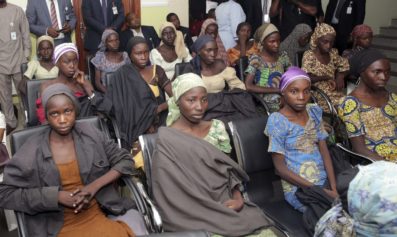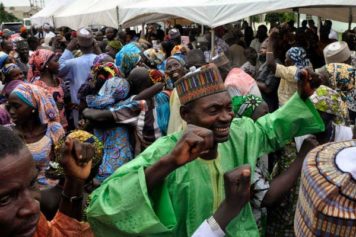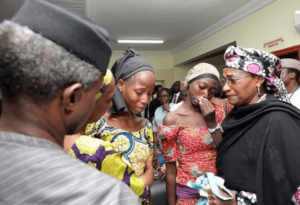
Some of the 21 Chibok school girls released are seen during a meeting with Nigeria’s Vice President Yemi Osinbajo in Abuja, Nigeria, October 13, 2016. Sunday Aghaeze/Special Assistant to Nigerian President Muhammadu Buhari/Handout via REUTERS
Nigerian authorities are involved in negotiations aimed at securing the release of some of the more than 200 girls kidnapped by Boko Haram in 2014 in the northeastern Nigerian town of Chibok, the president’s spokesman said on Thursday, Dec. 23.
His comments, posted on Twitter, came in response to reports in Nigeria’s media that some of the girls had been released by the Islamist militant group, reports that he said were untrue.
“The negotiations are ongoing and the Department of State Service, DSS is full of optimism that they will be successful,” Garba Shehu, a spokesman for President Muhammadu Buhari, said in a tweet.
“To my friends spreading the news of a further release of Chibok Girls, we are not there yet,” he tweeted.
in April 2014, around 270 girls were taken from their school in Chibok, Borno state, where Boko Haram has waged a seven-year insurgency aimed at creating an Islamic state, killing more than 15,000 people and displacing over two million.
Dozens escaped in the initial melee, but more than 200 girls remained missing until October, when 21 of the girls were freed following mediation by Switzerland and the International Red Cross.
Read more here.