
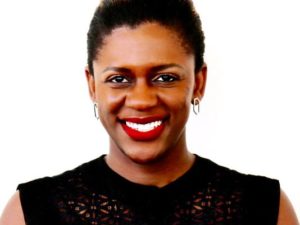
Monique Woodard, Executive Director of Black Founders
African-Americans comprise only 1.5 percent of investment team members at over 200 venture capital firms in the United States.
Additionally, the stats from a study conducted by Tech Crunch, investigating the current number of Black investors at venture capital in the United States, look even bleaker with less than 1 percent of investors being African-American.
In an attempt to increase the firm’s investments in Black and Latino tech entrepreneurs, 500 Startups recently welcomed its first African-American venture partner, Monique Woodard.
500 Startups is a leading global venture capital seed fund and startup accelerator that manages $200 million in assets and invests in 1300+ technology startups.
“We have to diversify who’s going out there and finding companies and who’s writing the checks,” Woodard told USA Today. “That is incredibly important. It’s hard to find Black and Latino founders if you don’t have Black and Latino investors on your staff.”
Woodard is executive director of Black Founders, a national network of African-American tech entrepreneurs that she co-founded. Black Founders launched a mentoring program to pair entrepreneurs with experienced founders. And it’s focused on creating more funding resources for Black entrepreneurs during the early stage.
Woodard is one of the few Black investors in Silicon Valley, which includes Y Combinator’s Michael Seibel; Precursor Ventures’ Charles Hudson; Intel Capital’s Lisa Lambert; and Laurence “Lo” Toney from GV (formerly known as Google Ventures).
With so few Black investors in the tech community, will her recent addition increase the chances for Black startups to receive funding from venture capitalists?
USA Today reports that 500 Startups has made investments in a number of tech companies with Black founders, including Tristan Walker’s company Walker & Co., which makes the Bevel shaving system, and Mayvenn, which helps beauticians sell hair extensions and other products. But 500 Startups co-founder Christine Tsai tells USA Today why most white investors normally overlook Black startups.
“Unfortunately, a lot of Silicon Valley venture capitalists are disconnected from African-Americans, Latinos and other people of color. They don’t understand these markets and, unfortunately, if they don’t understand them they are inclined to say, ‘I don’t get it,’ or ‘I can’t help you,’ or ‘I don’t think that’s a big market,’ ” she said.
In his Tech Crunch article, Black venture capitalist Richard Kerby says financiers mostly give to people who are in their network known as the “old-boys” club (friends, colleagues, college alumni). Because of this, African-American entrepreneurs lack connections to investors who have access to funds.
Kerby, Vice President at Venrock, says to support the growth of African-Americans in tech, there should be a focus on developing and growing a Black investment community and “expanding the network of people whom existing venture capitalists recognize, know and fund. This community could help create more entrepreneurs, resulting in more successful black-led companies who can then go on to fund and help other African-Americans start their own businesses.”
Of Woodard’s appointment, Walker said it’s “another win for the industry. Diversity matters, and most noticeably, at its earliest stages. It’s just good business.”


