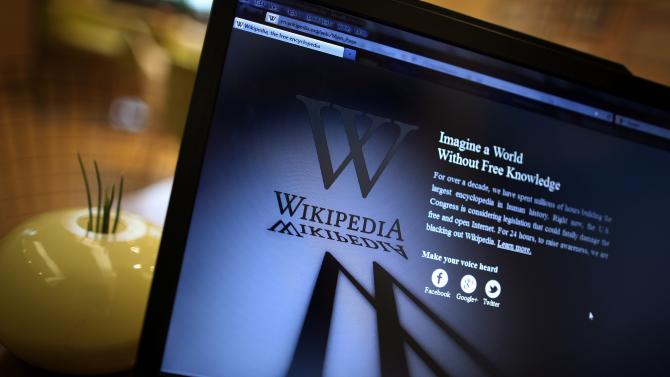
 Students and faculty members at Howard University are helping to expand Wikipedia’s database to include more of the untold stories of Black history.
It is far too often that today’s young undergraduate or curious Internet researcher sifts through Wikipedia pages to find the information they are seeking, but Wikipedia officials pointed out that when it comes to important facts about Black history, the website still has some major holes to fill.
Most people may forget that Wikipedia largely relies on independent editors, writers and academics to provide the content that so many people often rely on as fact.
Because of the structure of Wikipedia, there is no way for the website to control the fact that there is a stunning lack of information about Black history outside of the more well-known facts and figures.
“The stereotype of a Wikipedia editor is a 30-year-old white man, and so most of the articles written are about stuff that interests 30-year-old white men,” James Hare, the president of Wikimedia D.C., which is the local branch of the foundation that runs Wikipedia, told The New York Times. “So a lot of black history is left out.”
Teams of students and faculty members at Howard University are coming together in hopes to help fill these gaps and ensure that more information about great Black leaders, innovators, events and more are readily available online for the masses to discover.
On Thursday, the group worked tirelessly into the night at a Howard research center to kick off the daunting task.
With the help of coffee, pizza and one of the world’s largest repositories of Africana and African diaspora information, they managed to make great progress in adding more information about marginalized communities to one of the Internet’s most popular sources of information.
“You’d think that, ‘Oh, Wikipedia has articles on everything,’ but for anything having to do with a marginalized community, there’s a lot of gaps,” Hare added.
The Wikimedia Foundation is hoping to continue launching efforts that would cause a dramatic spike in the amount of information about Black history published on the digital encyclopedia all throughout February.
It’s a way that the foundation can not only celebrate Black History Month but also contribute to the preservation of Black history altogether.
 In addition to the Howard team, groups from National Public Radio and the New York-based Schomburg Center for Research in Black Culture are also planning on pitching in to add more content about Black history to Wikipedia’s databases.
The project has led to the creation of entries for Beth A. Brown, a former astrophysicist at NASA, and Farish Street, a hub for Black businesses in Mississippi that thrived until the 1970s, The New York Times reported.
Other entries were already present on the site but didn’t boast nearly as much information as other more mainstream topics.
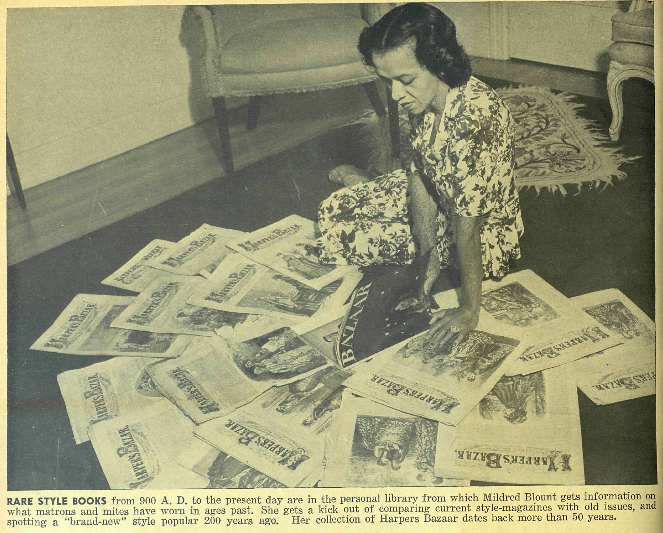
The research groups amended entries for Myra Adele Logan, the first woman to perform open-heart surgery, and Mildred Blount, an iconic Black fashion designer who designed the hats for Gone With the Wind.
Even as these educated groups help improve the content available on Wikipedia, however, they hope to remind students that this particular database is not the best source of information.
Instead, they warned, it should be used as a tool to guide further research.
“They’re using these articles as the beginning and the end,” said Joshua Myers, one of the professors who participated in the project Thursday, to The New York Times. “If it can be a point of departure, then it can become useful.”