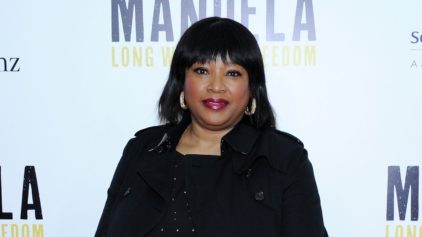
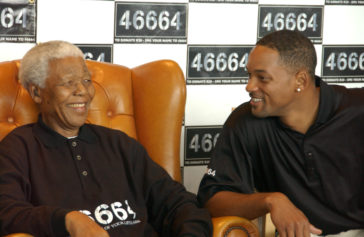
Desmond Tutu (Left) with Nelson Mandela (Right)
South African Archbishop Desmond Tutu on Tuesday hailed the day Nelson Mandela was released from prison 25 years ago as a “massively significant moment” freeing a man of “extraordinary magnanimity.”
Marking the February 11, 1990, liberation of the anti-apartheid leader and South Africa’s first Black president after 27 years of imprisonment, Tutu recalled that many people no longer remembered what Mandela looked like when he walked out of Victor Verster Prison, near Cape Town. But those hazy memories, he said, did not diminish the palpable importance of the day.
“We felt it was a massively significant moment for South Africa and the world, and time was to prove us right,” said Tutu in a statement.
The Archbishop lauded Mandela for his commitment to creating a non-racist society, and for his lack of bitterness towards his former oppressors. The cleric—who was among the first people to see the freed Mandela—said the apartheid government had not only imprisoned the iconic activist, but also unsuccessfully sought to scrub him from public memory. Instead, he triumphantly walked into freedom and beyond, larger than life.
“My own view is that the Nelson Mandela we came to know, though not without flaws, came just about as close as any human being ever has to personifying grace,” Tutu said, noting that cynics believed Mandela’s “lack of bitterness towards his former captors, his extraordinary magnanimity, and the emphasis he placed on reconciliation” were merely strategic positions designed to keep white capital in the country, and to attract foreign investors.
“I believe that the tall figure which emerged through the prison gates on that warm summer’s day 25 years ago had a critical advantage that transcended political strategy,” Tutu said.
Mandela spent 18 years of his imprisonment on Robben Island prison, a kidney-shaped island off the coast of Cape Town. He was later moved to mainland prisons of Pollsmoor and Victor Verster.
After his release from jail, Mandela led tough negotiations that paved the way for the country’s first democratic elections. He was elected president in 1994, staying in power for only a single five-year term. Mandela died on December 5, 2013, after a lengthy illness.
Source: Yahoo