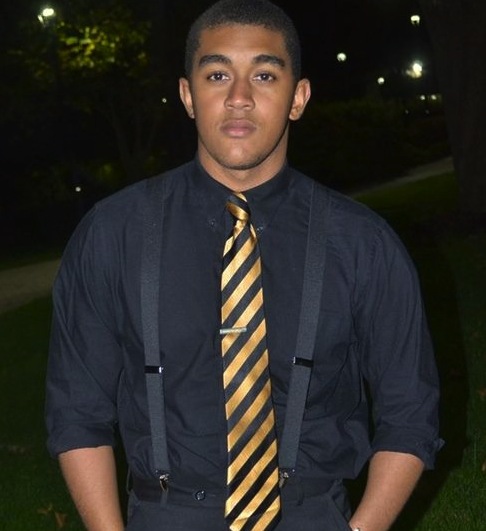
Kevin Hayes is suing Alpha Phi Alpha Fraternity.
Alpha Phi Alpha Fraternity, the nation’s oldest Black Greek organization, faces a $3-million lawsuit from a Bowie State University student who went into vivid detail describing forbidden hazing during his pledge process.
Kevin Hayes filed the suit yesterday in Prince George’s County Circuit Court for battery/hazing, false imprisonment and gross negligence from his fall 2013 period when he was “on line.”
Hayes, a junior at Bowie State, not only outlines incidents of physical abuse but he names the alleged violators. He said Alpha members Mike Ross, a former student, and Keenan Goins, a graduate student, and others punched, hit, slapped, body slammed and paddled Hayes.
His claims strike at the heart of fraternity and sorority life, which has come under scrutiny and criticism in recent years after other incidents of violence, including deaths, have been played out in the media. Hazing has long been a part of Black Greek life, from its inception in 1906, when Alpha Phi Alpha was founded at Cornell University.
Schools have outlawed hazing on campus and organization leadership has called for an end to the age-old tactics. But in many cases, pledging takes place “underground” or away from campus.
Bowie State, which was not named in the lawsuit, issued a statement that, in part, said: “Bowie State University has a stringent anti-hazing policy that is coupled with a strong anti-hazing education program. The university considers hazing to be indefensible and contrary to the interest of the university community. We work continuously with Greek and other student organizations to assure understanding that no activity that causes mental, physical or social harm will be tolerated.”
Fraternity and sorority members who endured the traditional and accepted hazing over periods of sometimes more than six weeks balk at the methods now. Much of it is unnecessary and over the top, bullies taking advantage of pledgees who are indefensible.
At the same time, Hayes going public about his experience violates the fraternity’s code of secrecy.
A photo shared with WUSA9 in Washington, D.C., shows bruising on Hayes’s buttocks. He said in the suit that he was required to attend five-to-eight hour “sets,” during which he would learn chapter and fraternity information. According to the lawsuit, he was physically punished if the information was not done correctly.
The punishments included “Jewel Shockers” (side slaps), “Back Racks” (back slaps), “Fat Joes” (chest slaps), as well as taking “wood” (paddling), the lawsuit claims.
Additionally, according to Hayes in the lawsuit, pledgees were not allowed to wear specific colors and were ordered not to “snitch” about the hazing.
After the hazing period was over, the lawsuit claims that fraternity members threatened Hayes and his mother, saying they would come by her house and see her.
Maryland’s anti-hazing law prohibits putting a student at risk of serious bodily injury for the purpose of initiation.
Hayes is currently a junior at Bowie State. He is the executive member at large for the Student Government Association for the 2014-2015 school year. He is also the University of Maryland System School Student Council member for the 2014-2015 school year. Hayes has been a member of the Maryland Army National Guard since 2013.