13 Mainstream Corporations Benefiting from the Prison Industrial Complex

Prison labor in the United States is referred to as insourcing. Under the Work Opportunity Tax Credit (WOTC), employers receive a tax credit of $2,400 for every work-release inmate they employ as a reward for hiring “risky target groups.”

The workers are not only cheap labor, but they are considered easier to control. They also tend to be African-American males. Companies are free to avoid providing benefits like health insurance or sick days. They also don’t need to worry about unions, demands for vacation time, raises or family issues.

According to the Left Business Observer, “the federal prison industry produces 100 percent of all military helmets, war supplies and other equipment. The workers supply 98 percent of the entire market for equipment assembly services; 93 percent of paints and paintbrushes; 92 percent of stove assembly; 46 percent of body armor; 36 percent of home appliances; 30 percent of headphones/microphones/speakers; and 21 percent of office furniture. Airplane parts, medical supplies and much more: prisoners are even raising seeing-eye dogs for blind people.”

With all of that productivity, the inmates make about 90 cents to $4 a day.

Here are some of the biggest corporations to use such practices, but there are hundreds more:
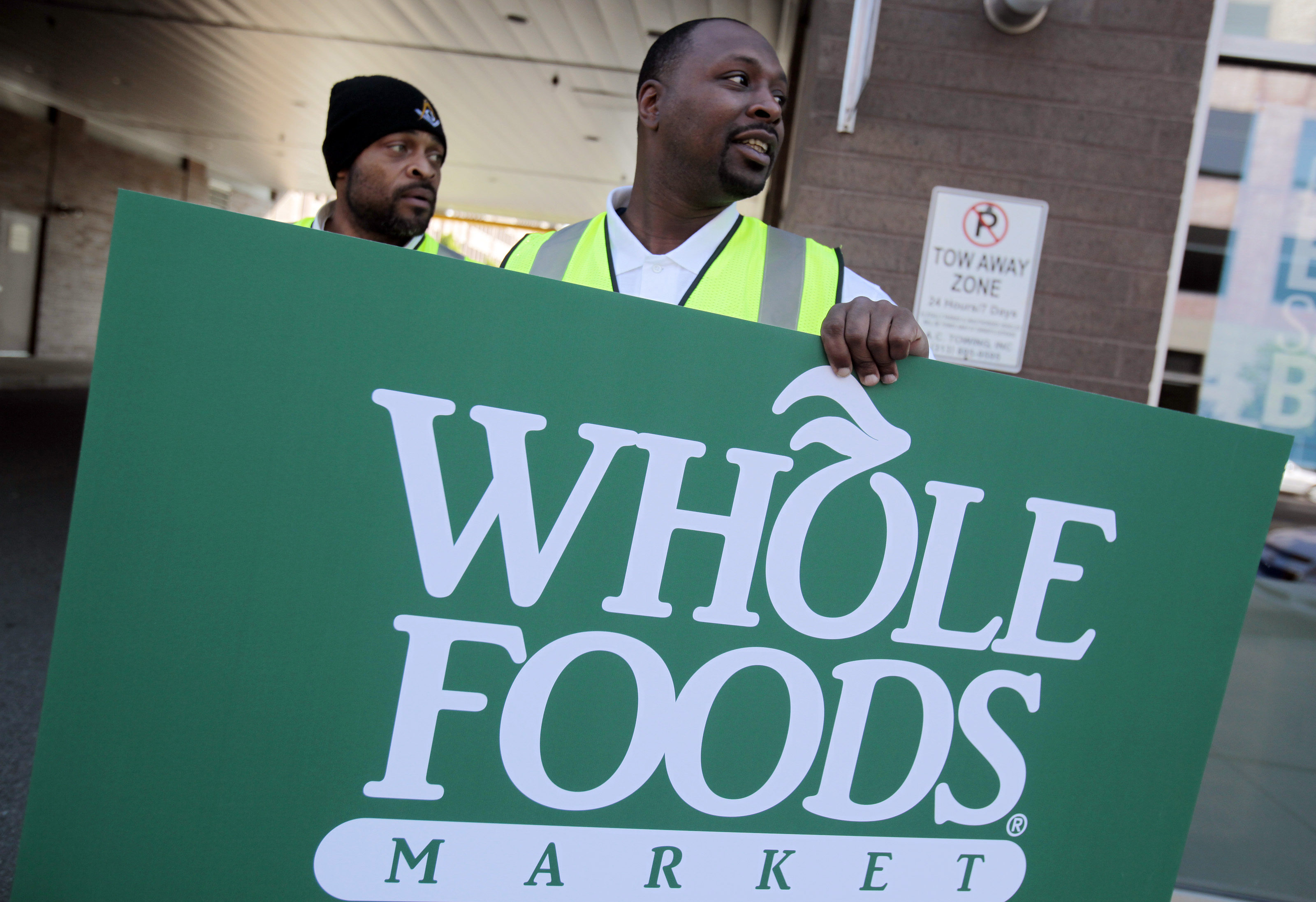
 

Troy Moss holds a sign as he directs traffic towards parking for the site of a ground breaking ceremony of the new 20,000-square-foot Whole Foods Market scheduled to open next year in mid-town Detroit, Michigan May 14, 2012. REUTERS/Rebecca Cook (UNITED STATES - Tags: FOOD BUSINESS) - RTR32250

Whole Foods

Since 2011, Whole Foods has benefited from inmate labor, purchasing food from Haystack Mountain Goat Dairy and Quixotic Farming ; two private vendors that uses cheap prison labor to raise fish and milk and herd goats.

Still independent.

We hope this story was worth your time. For over 14 years, Atlanta Black Star has stayed Black-owned and independently run. We didn't get here by waiting on ad budgets that were never built to prioritize us. Our readers did that.

Corporate support for Black media has always been thin. Outlets like ours get roughly 1% of the $170 billion spent on U.S. advertising each year, and that margin is shrinking further as advertisers walk back the DEI-linked commitments they made in 2020. That's the backdrop. It's not why we're asking.

The wider picture isn't any steadier. Newspaper ad revenue has fallen more than 80% since 2005, and local newsrooms are closing at a rate of roughly two a week nationwide. When outlets go under, it's rarely the ones built to center a Black perspective from the ground up that get to stick around.

We know a request for support isn't why you came here. But without readers choosing to fund this work directly, the depth of reporting we can do at home and abroad shrinks along with everyone else's. If you're not in a position to give, that doesn't change how much we value you as a reader.

If you are able to, a recurring contribution does more for us than a single one-time gift, because it lets us plan the next investigation instead of just the next invoice. It takes about 30 seconds, no long form, no account. Thank you for continuing to support independent journalism and freedom of the press.

Back to top