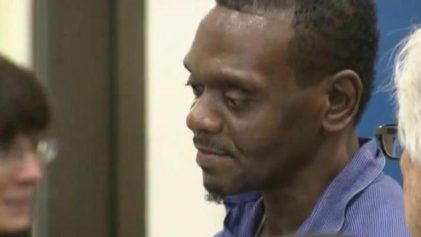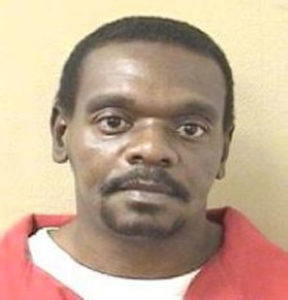
Henry Lee McCollum
A fascinating hearing is taking place Tuesday in North Carolina, where the courts have an opportunity to correct what appears to be an ongoing miscarriage of justice that has put two Black men behind bars for the past 30 years — one of them on death row — for a murder the DNA evidence overwhelmingly shows they didn’t commit.
The two North Carolina men, Henry McCollum — who faces execution — and his half-brother Leon Brown, were convicted as teenagers in 1984 of the brutal rape and murder of 11-year-old Sabrina Buie in the small town of Red Springs, N.C., in September 1983. But recent DNA test results have excluded both men as the source of the genetic material gathered at the crime scene.
At the same time, the DNA material matches another man, Roscoe Artis, who is serving a life sentence for committing a rape and murder whose details are remarkably similar to the murder of Sabrina and which occurred three weeks after McCollum and Brown were arrested. In addition, Artis was living just a few hundred feet from the soybean field where the girl’s body was found — and he reportedly made statements to a former fellow prison inmate and to staff members from the North Carolina Innocence Inquiry Commission, which took on the case, that he is certain Brown, now 46, and McCollum, now 50, were not involved in Sabrina’s murder.
The case also shines a disturbing spotlight on the behavior of the local police, who interrogated the teenagers for hours and coerced them into signing confessions that were “riddled with inconsistencies,” according to one of their lawyers, James Payne. Even as recently as last month, the Innocence Inquiry Commission discovered police had been concealing since 1984 a box of potentially critical physical evidence — clippings of Sabrina’s hair and nails and a beer can and gum wrapper found at the crime scene.
Payne told The Guardian that he hoped the hearing would show that the men are innocent, as they have claimed for decades. At the very least, he would like them to get a new trial, if not immediate release.
“This case highlights in a most dramatic manner the importance of finding the truth,” said his co-counsel Ann Kirby.
When DNA testing, ordered by the commission, was done on materials gathered at the scene of Sabrina’s murder, all the items tested – including her panties and other items of clothes, hairs collected from her shoes, sticks used in the killing, three Schlitz Malt Liquor cans and the butt of a Newport cigarette – excluded McCollum and Brown.
A partial DNA profile from the cigarette butt was found in July to be a match to Artis, who had a history of sexual assaults dating back to 1957.