Source: NY Times
On Aug. 16, 2012, Thembisa Nkuzo was among a group of women who set out from their homes in Nkaneng settlement, in South Africa’s platinum mining district, and began walking toward a rocky outcrop just south of the Lonmin mine.
Striking mineworkers had been camped out on “Marikana mountain” for several days, demanding that the British mining company pay them a living wage, and the women wanted to support them. But they never reached the outcrop because they met a group of local men on the path who warned them that the police were about to force a violent confrontation.
Nkuzo, a 28-year-old seamstress who had written solidarity songs for the strikers, wasn’t far away when she heard the first shots. “I saw workers running in every direction,” she recalls, quietly. “I remember those moments so well. And I cry so much.”
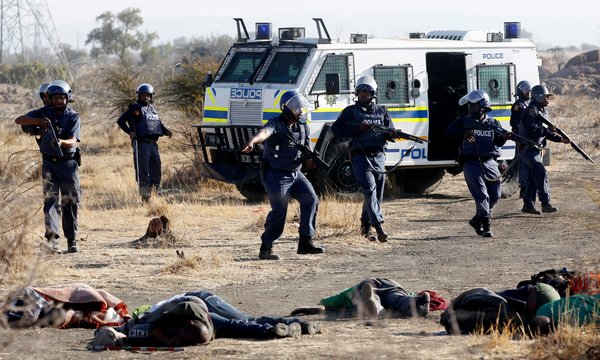
It has been two years since 34 mineworkers were killed by security forces and shocking images were seen around the world. An establishment version of events painted the miners as violent extremists: high on drugs and persuaded by a local witch doctor that they were invincible, several of them had reportedly charged toward police lines, brandishing traditional weapons. Officers had gunned them down in self-defense.
“You had a situation where workers were armed to the teeth, and they were killing their colleagues,” said South Africa’s national police commissioner, who later went on to congratulate her personnel on displaying “the best of responsible policing” during the tragedy. “Police retreated systematically and were forced to utilize maximum force to defend themselves.”
Evidence given at a formal commission of inquiry into the incident, which is due to give its final report this year, suggests that the official explanation was untrue.
Read more at www.theguardian.com