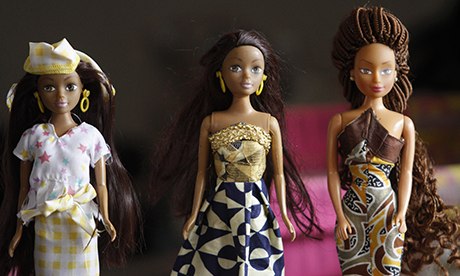
 With the booming economy in Nigeria and more Black children than anywhere else in the world, Taofick Okoya was dismayed when he could not find a Black doll for his niece.
The 43-year-old spotted a gap in the market and, with little competition from foreign firms such as Mattel Inc., the maker of Barbie, he set up his own business. He outsourced manufacturing of doll parts to low-cost China, assembled them onshore and added a twist – traditional Nigerian costumes.
Seven years on, Okoya sells between 6,000 and 9,000 of his Queens of Africa and Naija Princess dolls a month, and reckons he has 10-15 percent of a small but fast-growing market.
“I like it,” says Ifunanya Odiah, 5, struggling to contain her excitement as she inspects one of Okoya’s dolls in a Lagos shopping mall. “It’s Black, like me.”
While multinational companies are flocking to African markets, Okoya’s experience suggests that in some areas at least, there is still an opportunity for domestic businesses to establish themselves by using local knowledge to tap a growing, diverse and increasingly sophisticated middle class.
There’s no doubt about Nigeria’s economic potential. Economist Jim O’Neill has this year popularized it as one of the MINT countries – alongside Mexico, Indonesia and Turkey – that he sees as successors to the first wave of emerging markets he dubbed the BRICs (Brazil, Russia and India and China).
With about 170 million people, Nigeria is Africa’s most populous country by far, and its economy is growing at about 7 percent, vying with South Africa as the continent’s largest.
Several multinational firms have been on the continent for years. Drinks group Diageo, for example, sells more Guinness in Nigeria than in the beer’s traditional home market of Ireland; South African grocer Shoprite has seven profitable stores in Nigeria and plans to roll out hundreds.
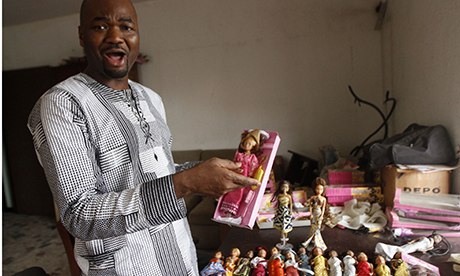 While Western economies struggle, the appeal of emerging markets for toymakers is clear. Between 2006 and 2011, developed countries saw toy sales grow just 1 percent a year, versus 13 percent in emerging markets, according to Euromonitor data. But in Nigeria, basic goods aside, consumerism is in its infancy, creating opportunities for entrepreneurs.
“When it comes to sectors like spirits or beer, or even cement, all the international players are already there,” says Andy Gboka, London-based equity analyst at Exotix LLP Partners. “Other sectors, such as toys or less-developed industries, provide a huge potential for local companies.”
Mattel, the world’s largest toy company, has been selling Black dolls for decades, but says its presence in sub-Saharan Africa is “very limited.” The firm does not have any plans for expansion into this region to share, according to a spokesman, Alan Hilowitz.
There are good reasons for foreign companies to be cautious. While Nigeria sees thousands of births every day, two-thirds of children are born into families unable to afford anything in most toy shops.
Multinationals also cite poor infrastructure and corrupt port authorities as reasons for steering clear. South Africa’s Woolworths pulled out of Nigeria last year, citing supply chain problems, though analysts said it also misread the local clothes market.
Source: theguardian.com