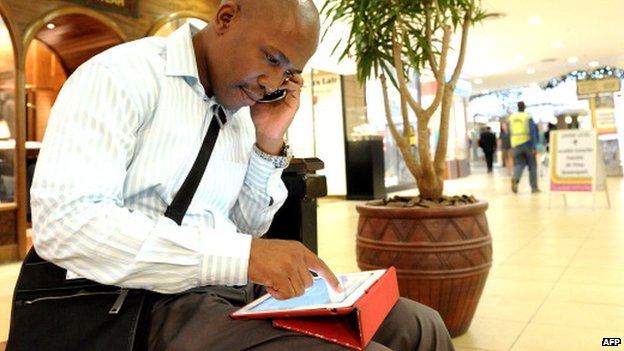
 The 566 percent increase in Internet usage since the start of the millennium might appear staggering, but not when compared with Africa, where online activity has grown by an astonishing 3,606 percent.
More than 160 million people are now connected throughout the continent, mostly on mobile phones.
With Internet access surging and connectivity increasing, the doors are being thrown open to digital publishing.
This year’s Human Development Report revealed that more than a quarter of the 170 million population are now online, heralding the dawn of a new publishing era.
“The proliferation of smartphones across Africa, combined with the inevitable burst into e-commerce, means that we would be foolish to ignore what is about to happen with publishing in Africa,” said Jeremy Weate of Abuja-based Cassava Republic, publisher of fiction, non-fiction and children’s books.
A romance imprint entitled Ankara Press and an original crime series, Cassava Crime, are due for release later this year with the focus on an e-reading audience, while Max Siollun’s Soldiers of Fortune, a non-fiction work charting Nigeria’s recent military history, has been published digitally as well as in hardback.
For the likes of Cassava Republic, e-publishing is fast proving a far more efficient business model than traditional methods.
“Moving to e-books addresses some of our most significant challenges with print books,” said Weate.
“In Nigeria, it is a tough ask to find a printer that can offer reliable services, a wide range of paper and guaranteed product quality.
“We don’t have to worry about printing, warehousing, distribution or engaging in fruitless marathons across the continent for payments that will never come,” he added.
Another of the country’s independent publishers, Kachifo, has also been keen to forge a digital path.
The Lagos operation is the first mainstream publisher in the country to release an e-book novel before it was published in print.
Fine Boys by Eghosa Imasuen was made available on the Amazon Kindle prior to its paperback release, while the text was also included as part of e-reading initiative Worldreader’s latest anthology.
Read the entire story on the BBC