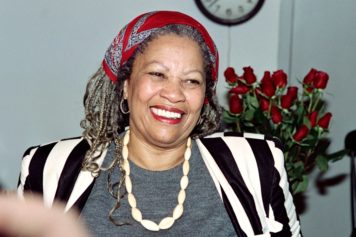
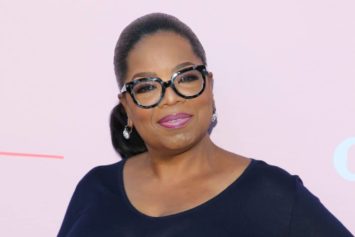
Over the 400-year course of African-American history, there have been many inspirational, irreplaceable voices speaking to the hearts and minds of our people through literature. They are men and women who reside alongside the canon of great American authors. Below, find 10 Black authors whose works should be featured in every American’s e-reader for the 21st century. (Will anyone have bookshelves anymore?) Consider telling a friend, foe, mother or lover about these writers — not just for Black History Month, but all day, every day, 365.
NOVELISTS
Alice Walker
This Georgia-born novelist, short-story writer, poet and activist is more than just the sum of her critical acclaim. It’s as if Alice Walker actually visualizes the characters in her tales, writing gripping narration that makes millions of readers care about how her characters turn out. A Pulitzer Prize winner for 1982’s The Color Purple —famously adapted to the screen by director Steven Spielberg two years later —Walker has also been a staunch opposer of South African apartheid and female genital mutilation.
Must-reads: The Third Life of Grange Copeland (1970); The Color Purple (1982); The Temple of My Familiar (1990).
Toni Morrison
Winner of the Nobel Prize, the Pulitzer Prize and the Presidential Medal of Freedom, Toni Morrison (born Chloe Ardelia Wofford) is known for her epic prose and richly detailed characters. Oprah Winfrey (also a star of The Color Purple) made it a personal mission to bring the Ohio native’s celebrated novel, Beloved, to the silver screen in 1998. A lover of Jane Austen and Leo Tolstoy, Morrison’s wickedly vivid dialogue has brought her shoulder to shoulder with the masters she once revered.
Must-reads: The Bluest Eye (1970), Sula (1974), Song of Solomon (1977), Tar Baby(1981), Beloved (1987).
Chester Himes
After a 1928 conviction for armed robbery, Chester Himes faced 20 years of hard labor for his crime. His first short stories—“Crazy in the Stir” and “To What Red Hell”—portray the hardships of prison life and reveal his preoccupation with the capricious nature of Black life. After surviving a catastrophic prison fire at the Ohio Penitentiary in 1930, Chester Himes would go on to have his written work published in Esquire magazine.
Must-reads: If He Hollers Let Him Go (1945); Cotton Comes to Harlem (1965)
Ralph Ellison
Best known for his one novel, Invisible Man, Ralph Ellison was originally a musician who attended Tuskegee Institute on a scholarship. A figurative student of T. S. Eliot, the Oklahoma City-born writer was an activist who wanted to educate and make humanity more self-aware. In 1965, Invisible Man was proclaimed the most important novel released since World War II; Ellison’s expression about the Black experience was as soulful and rich as the jazz he enjoyed. His influence on Black authors continues to this day.
Must-reads: Invisible Man (1952); Shadow and Act (1964); The Collected Essays of Ralph Ellison (1995)
Read more: Ebony