A Canadian university is ’fessing up to a racial profiling incident after a Black student skateboarding at the school said he was held in handcuffs for two hours when he couldn’t provide white campus security an ID.
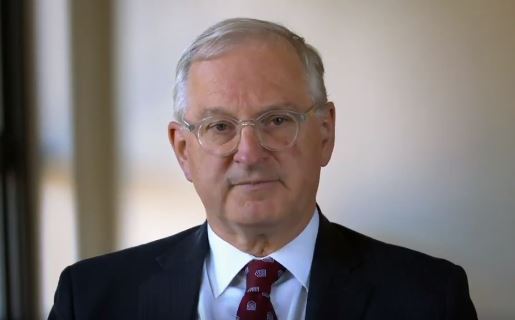
University of Ottawa President Jacques Frémont apologized and released findings from an internal investigation report on the encounter Tuesday at a news conference.
“The report concludes that race was a factor in the incident,” Frémont said at the news conference.
Jamal Boyce, the student in the incident, tweeted two videos June 13 from the encounter that month.
In one of the posts with the videos, he wrote that he was forced to sit on the busiest campus road “in handcuffs for two hours.”
Boyce called the encounter a “humiliating and messed up experience.”
“@uOttawa security used their authority to harrass and demean me,” Boyce said. “Is this how students will be continued to be treated on campus @uOttawa?”
President Frémont met with Boyce in person to apologize to him, the university said in a statement emailed to Atlanta Black Star Wednesday.
“I am deeply sorry for the way you were treated and for the humiliation that you experienced,” Frémont said. “I apologize to you for what happened. It was unacceptable and it was wrong.”
In Boyce’s video of the incident, he can be heard telling the first of at least two security officers he interacted with, “leave me alone.”
He repeatedly asked the officer to stop following him and said he wasn’t breaking any rules, according to the video, which appears to start toward the middle of the encounter.
“Why are you following me,” the student asked.
The officer responded, “I’m going to ask you one last time to leave campus.”
The two went back and forth a few times before the officer was heard in one of the video clips asking Boyce if he had ID on him.
“I don’t have to have ID on me,” he said. “I told you the first time I don’t have ID on me.”
Then, the officer was heard threatening Boyce: “If you don’t start walking off campus, I’m going to arrest you right now.
When Boyce asked why he would be arrested, the officer said for trespassing.
“I’m trespassing how?” Boyce asked. “I’m a student that pays a lot of money to go here.”
Boyce again asked the officer to stop following him.
“You’re actually making me feel uncomfortable,” he said.
At that point, the video — which had focused mostly on the student’s feet walking — flashed shots of two white officers.
“You’re under arrest,” one of the officers can be heard saying before the video depicts a blur of images and cuts off.
The university said its “outdated operational procedures and inadequate training” were factors in the incident, which has been a catalyst for change.
The university president had already unveiled a plan to combat racism on campus when the student was stopped. Since the June incident, the campus implemented four measures in the interim.
They include limiting when campus representatives can request ID, training for protection officers, adding a mechanism for filing complaints against the school’s protection services and implementing an anti-discrimination committee to advise the university president.
“It was my belief before the incident – and it is still my belief now – that overall, uOttawa remains a safe, accepting and inclusive community,” Frémont said. “A university is a learning institution. Learning is our mission, and our raison d’être.
“We are – we must be – dedicated to learning from what happened and how we can do better.”