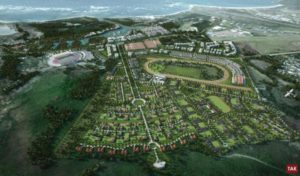
The $2.6 billion Pearl of the Caribbean development for the island of St. Lucia will include entertainment, housing, recreation, a casino and a race track.
St. Lucia’s government has signed an agreement to build the island’s first internationally targeted, integrated development — a project worth $2.6 billion designed to attract Chinese tourists and investment.
The Pearl of the Caribbean will occupy a 700-acre site on the south end of the island. Plans include a casino, horse racetrack, resort and shopping mall complex, free-trade zone, entertainment and leisure venues, and housing.
The project is designed to attract investment and tourism from China, Southeast Asia and Russia, as well as other countries where newly wealthy investors are seeking opportunities for their money.
The agreement is between several government agencies charged under the St. Lucia Citizenship by Investment Program, launched in January, and DSH Caribbean Star Limited. Construction is expected to begin in 2017.
Caribbean Star is an affiliate of Desert Star Holdings Ltd., a Hong Kong-based management and investment company with international holdings and experience. DSH has special interest in horse racing and breeding, and those will be important features of the Pearl of the Caribbean.
DSH and a joint venture partner last month signed agreements to kickstart a commercial horse-breeding operation in Ordos, Inner Mongolia, and to operate a racetrack there. That facility will host the CECF Ordos, a cultural and racing festival, Aug. 20-21, preceded by a race meeting.
Ultimately, DSH expects to be a key player in a massive expansion and improvement of racing in mainland China. The potential economic benefits would be enormous, especially should the Chinese government lift its longstanding ban on wagering, and several organizations are poised to help get that ball rolling.
Caribbean Star also is affiliated through DSH with the China Horse Club, which offers Chinese investors the opportunity to participate in international horse ownership. CHC-owned horses are competing at major venues around the world and have won races at the highest levels.
The club also has fostered ties with many of the most important forces in international racing.
The equine facility at the Pearl of the Caribbean plans for more than 1,000 horses, with the capability of hosting featured racing carnivals.
Read more here.