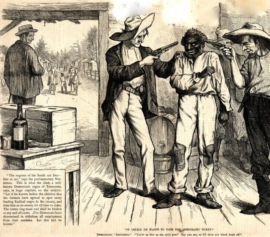
Erased from History? 10 Things You Didn’t Know About Slavery in the North

While the enslavement of African people was undoubtedly one of the central features of the Southern economy for nearly two centuries, it shouldn’t be forgotten that slavery thrived in all of the original colonies. Enslaved people were auctioned openly in the Market House of Philadelphia, in the shadow of Congregational churches in Rhode Island, in Boston taverns and warehouses and weekly, sometimes daily, in Merchant’s Coffee House of New York. At some point in their lives, such American “heroes” as John Hancock, Benjamin Franklin, Abraham Lincoln (when he was a child his family enslaved people) and William Henry Seward — Lincoln’s anti-slavery secretary of state during the Civil War — owned Black people. These are some of the features of slavery in the North you probably didn’t know.
2011.5.0002

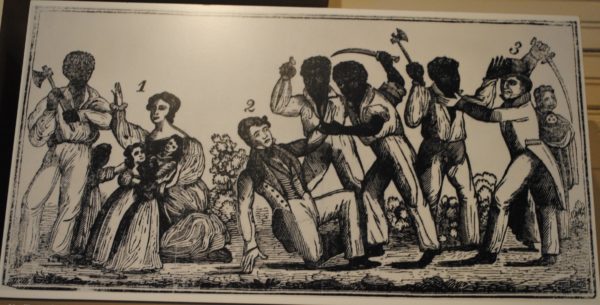
The Enslaved Population Had Northern Whites Frightened That They Were on the Verge of Insurrection

When the minutemen marched off to face the redcoats in Lexington, Massachusetts, in 1775, the wives, boys and old men they left behind in Framingham took up axes, clubs and pitchforks and barred themselves in their homes because of a widespread, and widely credited, rumor that the local enslaved population planned to rise up and massacre the white inhabitants while the militia was away.

slave_auction_charleston

Slavery Could Be Just as Brutal in the North

Practices such as the breeding of enslaved people like animals for market or the crime of enslaved mothers killing their infants testify that slavery’s brutalizing force was at work in New England.
Still independent.

We hope this story was worth your time. For over 14 years, Atlanta Black Star has stayed Black-owned and independently run. We didn't get here by waiting on ad budgets that were never built to prioritize us. Our readers did that.

Corporate support for Black media has always been thin. Outlets like ours get roughly 1% of the $170 billion spent on U.S. advertising each year, and that margin is shrinking further as advertisers walk back the DEI-linked commitments they made in 2020. That's the backdrop. It's not why we're asking.

The wider picture isn't any steadier. Newspaper ad revenue has fallen more than 80% since 2005, and local newsrooms are closing at a rate of roughly two a week nationwide. When outlets go under, it's rarely the ones built to center a Black perspective from the ground up that get to stick around.

We know a request for support isn't why you came here. But without readers choosing to fund this work directly, the depth of reporting we can do at home and abroad shrinks along with everyone else's. If you're not in a position to give, that doesn't change how much we value you as a reader.

If you are able to, a recurring contribution does more for us than a single one-time gift, because it lets us plan the next investigation instead of just the next invoice. It takes about 30 seconds, no long form, no account. Thank you for continuing to support independent journalism and freedom of the press.

Back to top