Philadelphia transit workers returned to their jobs early Saturday after President Barack Obama stepped in to put an end to their brief strike.
The strike started after negotiations between transit workers and the Southeastern Pennsylvania Transportation Authority failed to result in a new contract deal Friday, Al Jazeera reported.
The workers said they went on strike in an attempt to force SEPTA to give them a raise of at least 14.5 percent over five years.
According to Boston.com, the requested raise would be around 3 percentage points higher than SEPTA offered.
Reports also surfaced that the strike forced 13 train lines to close, making transportation from Philadelphia to the suburbs, the Philadelphia International Airport and New Jersey a hassle.
Thanks to the president’s intervention, however, all 13 of the train lines were running again before 5 a.m. Saturday morning.
“Regional Rail is back,” Jerri Williams, the spokeswoman for SEPTA, said in an email to Boston.com.
Obama granted a request from Pennsylvania Gov. Tom Corbett to appoint an emergency board to mediate the contract dispute.
“The people of Philadelphia and the surrounding region expect and deserve a safe and efficient rail system to get to work, medical appointments, school and recreation,” Corbett said in a statement. “I call on both parties to work together, find common ground and place the riders at the forefront of mind in their discussions.”
Granting the request forced the 400 union workers to return to work while also establishing a three-member board that will work toward a “swift and smooth resolution.”
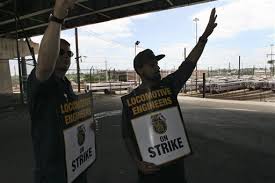 The International Brotherhood of Electrical Workers president Terry Gallagher said that the president’s intervention is exactly what the workers needed.
“We have been five years without an agreement, trying to get to this point, and we’re happy we’re here now,” Gallagher said.
While the union and SEPTA will not resume negotiations with each other, both parties are required to participate in the board’s process to reach a solution.
This process typically involves written submissions and multiple hearings.
The president has given the board 30 days to deliver a report recommending how the dispute should be settled.
There were fears that without the president’s intervention, the strike could have resembled the last regional rail strike in 1983.
The 1983 strike lasted for more than three months.
Prior to the president intervening, Stephen Bruno, the vice president of the Brotherhood of Locomotive Engineers and Trainmen, expressed his concerns about how far the strike could possibly go.
“I hope it doesn’t go that far,” he said, comparing the strike to the one in 1983. “I don’t anticipate that it would, but I don’t know how long it will take us to try to find a common ground – if there is any.”
With major construction already plaguing the area, the rail strike was a major headache for commuters.