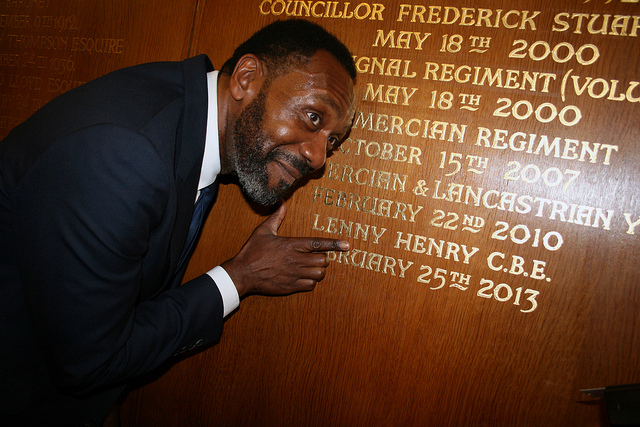
Credit: Phil Brooks
British actor Lenny Henry has introduced a new proposal aimed at increasing what he called an “appalling” number of Black people in the TV industry.
Henry is calling for new legislation to help reverse the trend of minorities being pushed out of the TV industry, especially in the U.K.
Despite over 4,000 new jobs being created in the U.K. television industry, more than 2,000 Black, Asian and minority ethnic (BAME) people have been forced out of the TV business between 2006 and 2012, according to an industry census conducted by Creative Skillset.
In other words, the number of BAME workers has drastically decreased by over 30 percent in only six years.
With only a little more than five percent of the industry being composed of BAME workers, Henry believes now is the time for new regulations to give minorities a fighting chance.
During the annual BAFTA television lecture in Britain on Monday, Henry proposed that companies begin ring-fencing money for BAME productions.
This would benefit companies by creating safety in the bonds, and overall encourage companies to have a more diverse staff.
The proposal defines a BAME production as meeting at least two of three requirements:
1. At least 50 percent of the production staff must be BAME
2. At least 30 percent of the production company controllers must be BAME
3. At least 50 percent of onscreen talent must be BAME
The proposal also stated that “commissioners should be appointed to actively seek out” BAME productions.
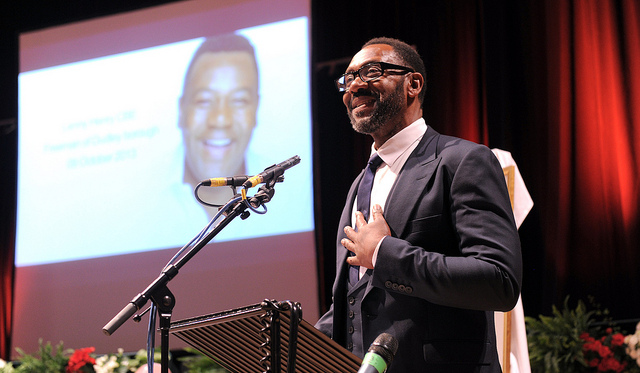
Credit: Dudely Council
Henry said that he hopes the proposal will soon become an active regulation that could help bring some relief to a situation that has “deteriorated badly.”
He noted that the percentage of BAME workers in the U.K. TV industry is at the lowest point ever, since Creative Skillset began conducting the census.
Henry also put the statistics of the census in simpler terms as he explained that “for every Black and Asian person who lose their job, more than two white people were employed.”
The proposal was an extension of the same ideas and concerns that Henry brought up earlier in March at a roundtable held by the U.K. government culture minister Ed Vaizey.
Only time will tell if the veteran actor and comedian’s “screen dream” will become a reality.