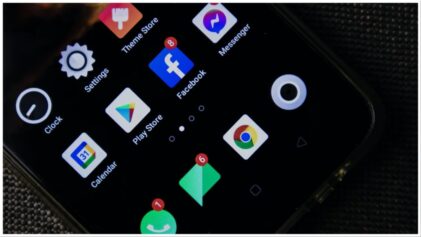
The future of computing is in the palm of your hand — and Facebook knows it. That’s why the most encouraging thing about the tech giant’s generally solid earnings report Wednesday was the fact that mobile revenues represent a fast-growing chunk of the company’s overall business.
Facebook founder Mark Zuckerberg has made it clear that mobile growth is a top priority for the company. “There is no argument,” he told Wall Street analysts earlier this year. “Facebook is a mobile company.”
Facebook’s mobile efforts are starting to pay off: 30 percent of Facebook’s ad revenue came from mobile devices last quarter, up from 23 percent during the previous quarter and 14 percent the quarter before that.
To put that in perspective, Facebook’s mobile revenue as a percentage of total revenue in the first quarter of 2012 was 0 percent — zero. Late last year, the number of daily Facebook users on mobile devices surpassed the number of users who access the site on desktop computers, an important and symbolic milestone. Eventually, Facebook expects to make more money from mobile users than it does from desktop users.
“They are making the transition to mobile faster than anyone anticipated,” Sterne Agee analyst Arvind Bhatia told the Associated Press. “It seems like they are delivering.”
Part of this shift is being driven by a profound structural change in the technology industry thanks to the explosive growth of sophisticated smartphones like Apple’s iPhone and Google’s Android devices.
The simple fact is that people are increasingly accessing Internet services like Facebook, Google, and Twitter on their smartphones, as opposed to traditional desktop computers. That’s why mobile ad revenue is rapidly becoming one of the most important consumer Internet metrics: In short, the locus of computing is moving away from the desktop and toward smartphones and tablets.
The audience numbers associated with Facebook are staggering. As of March 31, the social network had 1.11 billion users who logged on to the service every month, an increase of 23 percent compared to last year. Of those, some 751 million users logged on to Facebook using their mobile devices, an increase of 54 percent year-over-year.
And 189 million users logged on to the site solely through their mobile device, more than double the number who did so last year. Facebook is expected to account for 13 percent of U.S. mobile ad spending this year, up from 9.5 percent in 2012, according to data from research firm eMarketer cited by Bloomberg. ..
Read more: business.time.com